 Plantlet The Blogging Platform of Department of Botany, University of Dhaka
[Click here to read ‘Bichemical Cycle (part- 1 )’ ] Threats to the Carbon Cycle Decline in forest growth. Killing of ocean phytoplankton due to rising sea temperatures. Death of forests due to spread of disease and insects. Melting permafrost layer (In geology, permafrost or permafrost soil is soil at or …
Read More »TimeLine Layout
March, 2020
-
23 March
Biogeochemical Cycles (part- 1)
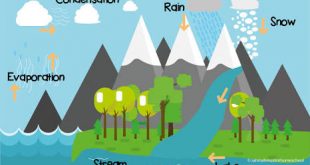
Definition A biogeochemical cycle or nutrient cycle is a pathway by which a chemical element or molecule moves through both biotic (biosphere) and abiotic ( lithosphere, atmosphere, and hydrosphere ) compartments of Earth. ★Nutrient cycle involves 2 general phases- The environmental phase – in which the chemical nutrient is present in …
Read More » -
23 March
Ecology: Definition, Subdivisions & Scopes
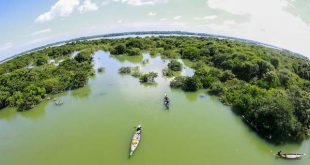
Ecology is the scientific study of the interactions that determine the distribution and abundance of organisms. It is the total relationships of animals to both its organic and inorganic environment’. It can be said that there is very little that is not ecology. In this article, the Definition, Subdivision, and …
Read More » -
22 March
Adaptation Of Plants
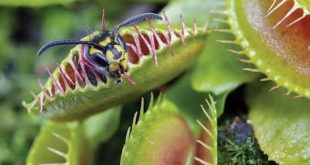
Do you ever notice any cacti in a normal field or pond? Or ever seen any Mango, Jackfruit, or other fruiting trees in the seashore? It’s not to happen. And here comes the fact of adaptation of plants in different habitats. Adaptations are special features that allow a plant or …
Read More » -
22 March
Halophytes: Adaptation in Saline Environment
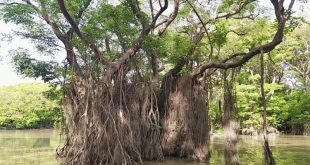
Plants that survive in the saline condition are known as halophytes. Since halophytes can not easily absorb water, they develop almost all important xerophytic devices for optimum use of water. Habit Majority of halophytes in the tropical and subtropical regions are shrubs (dome-shaped), but a few of them are herbaceous …
Read More » -
22 March
Ecosystem components, Biome & Food Chain
Definition An ecosystem is a structural and functional unit of the nature where there functional unit of the nature is interactions between living organisms and nonliving components and that living components determine the flow of energy and nutrients.e.g. pond ecosystem, forest ecosystem etc. Ecosystem performs 2 major functions : flow …
Read More » -
20 March
The Fun in Biology: Learning through Memes

Ever wondered how your body deals with the harmful pathogens inside you? Yes? No? No matter what your answer is, if you are a student of science you should already know a little bit about this topic because you were forced to learn about it for your exams. Was it …
Read More » -
20 March
Introduction to Biostatistics: Scope, Variable & Data

Objectives of this article To understand What is statistics What is biostatistics Scopes of statistics What is variable What is a random variable Types of variables What is a qualitative or discrete variable What is a quantitative or continuous variable Practical examples of qualitative or quantitative variables Read the next …
Read More » -
20 March
Introduction to Biostatistics: Population, Sample, Statistic & Parameter

Objectives of this article To understand What is a population? What is a sample? The differences between population and sample. What are parameter and statistic? The differences between parameter and statistic. What is sampling? What is random sampling? Importance of random sampling. The biases in sampling. Read the previous article: …
Read More » -
19 March
Adaptation of Hydrophytes & Xerophytes
Do you know how plants adapt them in hydrophytic and xerophytic conditions? From the very beginning of the formation of the earth, the environment is changing day by day. As a result, each and every organism in here, need to make itself fit with the changes happening around. From that …
Read More »