Plantlet The Blogging Platform of Department of Botany, University of Dhaka
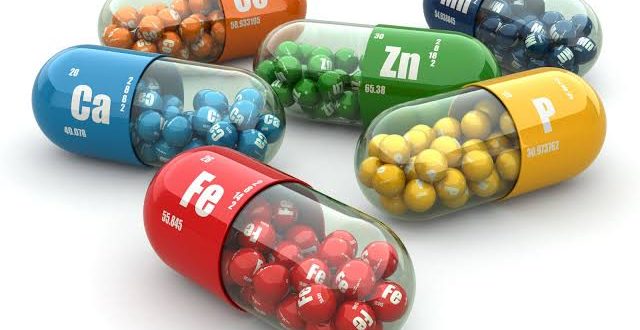
Source of minerals
Rocks, ores and gems
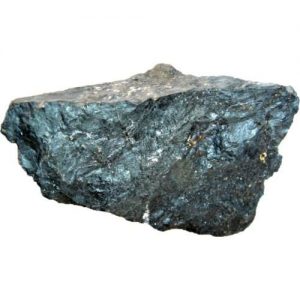
A rock is a mass of one or more minerals or mineral substances. Some rocks, such as limestone or quartzite, are composed primarily of one mineral – calcite or aragonite in the case of limestone, and quartz in the latter case. Other rocks can be identified by the relative abundance of the (base) minerals; Granite is defined by the proportions of quartz, alkali feldspar, and plagioclase feldspar. Other minerals in the rock are called additional minerals, and they do not significantly affect the larger composition of the rock. Rock can also be composed entirely of non-metallic materials; Coal is a sedimentary rock that is mainly composed of organically derived carbon.
Best safe and secure cloud storage with password protection
Get Envato Elements, Prime Video, Hotstar and Netflix For Free
Best Money Earning Website 100$ Day
#1 Top ranking article submission website

Ores are minerals that have a high concentration of a certain element, typically a metal. Examples are cinnabar (HgS), a mercury mineral; sphalerite (ZnS), a zinc mineral; cassiterite (SnO2), a tin ore; and colemanite, a boron mineral.
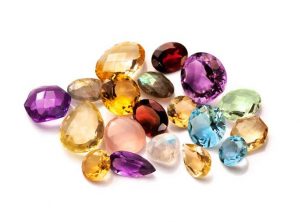
Gems are minerals with an ornamental value and are distinguished from non-gems by their beauty, durability, and usually rarity. There are about 20 mineral species that qualify as mineral gems, which make up about 35 of the most common gemstones. Gem minerals are often found in different varieties, so one mineral can represent several different gems; for example, ruby and sapphire are both corundum, Al2O3.
Classification of Minerals
Earliest classification
Theophrastus (in 315 BC) presented his classification of minerals in his treatise on stones. Its classification was influenced by the ideas of its teachers Plato and Aristotle. Theophrastus classified minerals as stones, earths, or metals. Georgius Agricola’s classification of minerals in his book De Natura Fossilium published in 1546 divided minerals into three types of substances: simple (stones, earths, metals, and solidified juices), compound (intimately mixed), and compound (separable).
Linnaeus classification
Carl Linnaeus gave an early classification of minerals in his seminal 1735 book, Systema Naturae. He divided the natural world into three kingdoms: plants, animals, and minerals, and classified each with the same hierarchy. In descending order, these were Phylum, Class, Order, Family, Tribe, Genus, and Species. However, although his system was justified by Charles Darwin’s theory of species formation, and has been widely adopted and expanded by biologists in subsequent centuries, (he still uses his Greek and Latin based binomial nomenclature scheme) , had little success among mineralogists.
Modern classification
Minerals are classified by variety, species, series and group, in order of increasing generality. The basic level of definition is that of mineral species, each of which is distinguished from the others by unique chemical and physical properties. For example, quartz is defined by its formula, SiO2, and a specific crystal structure that distinguishes it from other minerals with the same chemical formula (called polymorphs). When there is a range of composition between two mineral species, a mineral series is defined. For example, the biotite series is represented by varying amounts of phlogopite, siderophyllite, annite and eastonite. In contrast, a mineral group is a group of mineral species with common chemical properties that share a crystal structure. The pyroxene group has a common formula of XY (Si, Al) 2O6, where X and Y are both cations, with X typically greater than Y; pyroxenes are single chain silicates which crystallize in orthorhombic or monoclinic crystal systems. Finally, a mineral variety is a specific type of mineral species that differs in certain physical characteristics, such as color or crystalline habit. One example is amethyst, which is a purple variety of quartz.
The abundance and diversity of minerals are directly controlled by their chemistry, which itself depends on the elemental abundances of the Earth. Most of the minerals observed come from the earth’s crust. Eight elements represent most of the key components of minerals, due to their abundance in the crust.
Eight elements account for many of the key components of minerals, thanks totheir abundance within the crust. These eight elements, summing to over 98% of the crust by weight, are, so as of decreasing abundance: oxygen, silicon, aluminium, iron, magnesium, calcium, sodium and potassium. Oxygen and silicon are far and away the 2 most vital– oxygen composes 47% of the crust by weight, and silicon accounts for 28%.