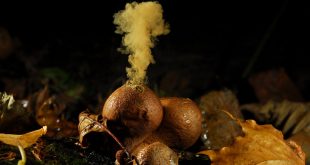
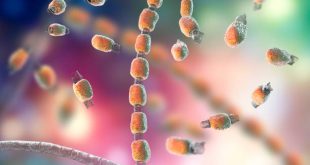
REPRODUCTION OF DEUTEROMYCETES Commonly called molds, Deuteromycetes are ” Second-class ” fungi carrying no sexual state in their life cycle, reproduced by means of special spores known as conidia (sing. conidium) via mitosis. This state of asexual fungi called Anamorph. In other words, this imperfect fungi …
Read More »Aspergillus: An Imperfect Fungus
ASPERGILLUS Aspergillus was first catalogued in 1729 by the Italian priest and biologist Pier Antonio Micheli. Viewing the fungi under a microscope, Micheli was reminded of the shape of an aspergillum (holy water sprinkler), from latin spargere (to sprinkle), and named the genus accordingly. Aspergillum is an asexual spore-forming …
Read More »Ophiocordyceps: The Zombie or Brain-manipulating Fungus
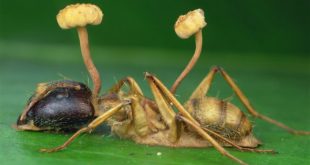
Host manipulation induced by parasites is broadly distributed in nature and it has been a topic of several studies over the past decades (Thomas et al. 2010). Ophiocordyceps unilateralis (Clavicipitaceae: Hypocreales) is a fungal pathogen-specific to ants of the tribe Camponotini (Formicinae: Formicidae) with global distribution. Among these myrmecophilous species, this so-called …
Read More »Psychology of Slime Molds: Regression to the Mean
Today we believe that being an exception is the new normal. We try our best to be an exception at something, to be an outlier. We don’t wanna be among the average people. We don’t wanna be mediocre. But mediocrity prevails in nature in every phenomenon. No matter how hard …
Read More »Lower Fungi: Classification of Lower Fungi
Fungi are considered to be one of the most interesting sets of organisms. Some fulfills the basic necessities such as food, medicine, industrial raw materials and some succumbs the living entities to death.According to legend, three and a half millennia ago, the Greek hero Perseus accidentally assassinated his grandfather Acrisius, …
Read More »Fungi: Importance in Economy
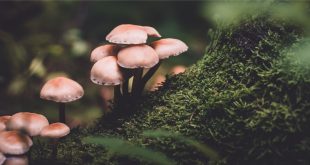
Fungi (singular: fungus) are a kingdom of generally multicellular eukaryotic creatures that are heterotrophic (cannot produce their food) and play essential roles in ecosystem nutrient cycling. Fungi are a diverse group of creatures that can be found in almost any ecological niche. Fungi number around 1.5 million species. Only roughly …
Read More »Fungi: Sexual Reproduction
Fungi are microscopic/macroscopic eukaryotic and heterotrophic organisms exhibiting growth on various natural and synthetic substrates and are capable of continuing their function almost indefinitely. Unlike other microorganisms such as algae, fungi lack the chlorophyll necessary for photosynthesis and must therefore live as parasites or saprobes. About 80 000 to 1,20,000 …
Read More »Fungi: Asexual Reproduction & Reproductive Structures
The fungi constitute a group of living organisms devoid of chlorophyll. They resemble simple plants in that, with few exceptions, they have definite cell walls, they are usually nonmotile, although they may have motile reproductive cells, and they reproduce by means of spores. A spore (Gr. spora = seed, spore) …
Read More »চেরনোবিল, কোভিড-১৯ এবং ব্ল্যাক ফাংগাস
ঘটনাটি ১৯৮৬ সালের। রাশিয়াতে চেরনোবিল পারমানবিক শক্তি কেন্দ্রে ঘটে এক ভয়াবহ বিস্ফোরণ। এতে তাৎক্ষণিকভাবে মৃত্যু ঘটে বহু মানুষের। পাশাপাশি ধ্বংস হয়ে যায় সেখানকার গাছপালা , পশু-পাখি এবং অন্যান্য জীব। শুধু তাই নয়, আজ পর্যন্ত এর তেজস্ক্রিয়তার প্রভাবে এলাকাটি কোনো জীব বসবাসের অযোগ্য। যাদের তৎক্ষনাত মৃত্যু ঘটে নি, তারাও সেখানকার চরম …
Read More »Chernobyl, Covid-19 and Black Fungus
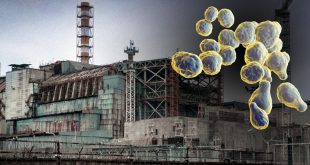
In the year 1986, a horrifying incident took place. It killed many instantly (who were very close to the nuclear reactor). As well as kept on affecting several many living beings including plants, wild and domestic animals. The extreme radioactive environment affected the people whoever was still living in that …
Read More »
Plantlet The Blogging Platform of Department of Botany, University of Dhaka