 Plantlet The Blogging Platform of Department of Botany, University of Dhaka

Unlike other living beings plants are immobile. They have to live at the mercy of nature. If the place they are standing on has a scarcity of water or minerals, they can’t move to a better place. If a tornado or cyclone arrives they can’t escape from it and take …
Read More »Lycophyta
Lycophyta is a division of the plant kingdom that includes club mosses, spike mosses, and quillworts. These fascinating plants have a rich history, dating back over 300 million years to the early days of the terrestrial environment. Despite their ancient origins, lycophytes have a unique and important place in the …
Read More »Debunking The Myth: White Dots on Strawberries are Not Seeds

We’ve all enjoyed the sweet, juicy taste of fresh strawberries, but have you ever wondered what those tiny white dots on the surface are? Many people mistake them for seeds, but they’re actually a completely different part of the fruit. In this article, we’ll take a closer look at those …
Read More »Exploring The ‘Doomsday’ Seed Vault: VR Tour

The “Doomsday” Seed Vault, also known as the Svalbard Global Seed Vault, is a secure facility located on a remote island in Norway. Its purpose is to preserve the world’s plant biodiversity by storing seeds from crop plants, wild relatives, and other plant species in case of a global catastrophe. …
Read More »Establishing Calluses: Tissue Culture
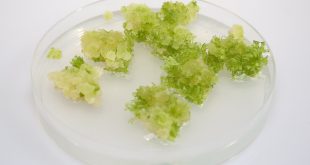
Callus culture is a widely used technique in plant research and breeding. It involves inducing the formation of calluses, which are undifferentiated masses of cells that can be regenerated into whole plants. Establishing and maintaining calluses in tissue culture is a crucial step in many plant research studies. However, it …
Read More »Cellular Totipotency: From A Single Cell to A Fully-Formed Organism
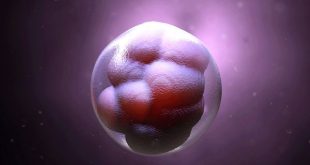
Creating a fully-formed organism from a single cell is one of the most remarkable feats of biology. While this may seem like a daunting task, every living organism begins its life as a single cell that has the potential to differentiate and develop into every type of cell found in …
Read More »Crop Diseases: Top 10 Economic Importance
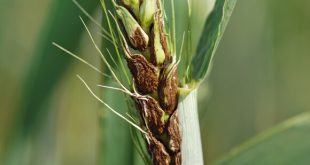
Crop diseases are a major concern for farmers and agricultural economies worldwide. These diseases can significantly impact crop yields and quality, leading to economic losses and food insecurity. In this article, we will discuss the ten most important economic impacts of crop diseases. 1. Yield Reduction Crop diseases can have …
Read More »Psilophyta: The Simplest Form of Vascular Plants
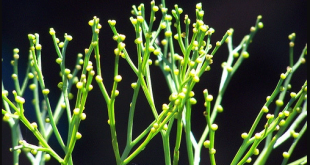
Plants have been a crucial part of the earth’s ecosystem for millions of years. From towering trees to tiny mosses, they have diversified and adapted to various environments. One group of plants that has remained relatively unchanged for hundreds of millions of years is the Psilophyta, also known as whisk …
Read More »Greenwashing: A Technique to Deceive Environmentalists

Greenwashing is an evolutionary technique developed by large corporations. It’s an emerging strategy to deceive environmentalists. Like every other country, many large companies in Bangladesh are also following this technique to grab the attention of people who are prone to buy products from environment-friendly companies, not from others. This strategy …
Read More »Houseplants in Future: Our At-Home Power Plant
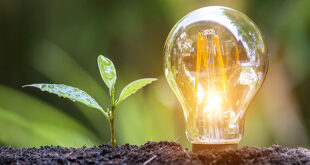
While imagining the future, we think about a lot of things like flying cars, robots assisting humans, and even time machines. But do we ever imagine ourselves depending on plants to watch TV, turn on fans, or even charge our mobile phones? For now, it may seem hard to create …
Read More »