Nomenclature, in biological classification, system of naming organisms. The species to which the organism belongs is indicated by two words, the genus and species names, which are Latinized words derived from various sources. This system, which is called the Linnaean system of binomial nomenclature, was established in the 1750s by Carolus Linnaeus. Subsequent to the work of Linnaeus, a …
Read More »The Mechanical Tissue: Types, Distribution, and Function
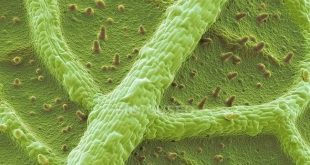
No plant can flourish, or even maintain its existence for long unless it is provided with arrangements that ensure that the plant body as a whole is firmly knit together and that each of its organs is possessed of the requisite degree of mechanical strength. The plants which are made …
Read More »Vascular Bundle: The Conducting Tissue of Plant
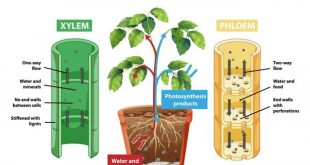
The vascular tissue system consists of a number of vascular bundles which are found to be distributed in the stele. The stele is the central cylindrical portion of the stem and root, commonly surrounded by endodermis, and consists of vascular bundles, pericycle, pith and medullary ray. Each vascular bundle consists …
Read More »Debunking The Myth: White Dots on Strawberries are Not Seeds
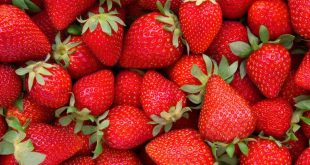
We’ve all enjoyed the sweet, juicy taste of fresh strawberries, but have you ever wondered what those tiny white dots on the surface are? Many people mistake them for seeds, but they’re actually a completely different part of the fruit. In this article, we’ll take a closer look at those …
Read More »Exploring The ‘Doomsday’ Seed Vault: VR Tour
The “Doomsday” Seed Vault, also known as the Svalbard Global Seed Vault, is a secure facility located on a remote island in Norway. Its purpose is to preserve the world’s plant biodiversity by storing seeds from crop plants, wild relatives, and other plant species in case of a global catastrophe. …
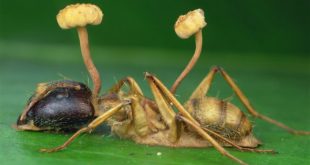
Read More »Ophiocordyceps: The Zombie or Brain-manipulating Fungus
Host manipulation induced by parasites is broadly distributed in nature and it has been a topic of several studies over the past decades (Thomas et al. 2010). Ophiocordyceps unilateralis (Clavicipitaceae: Hypocreales) is a fungal pathogen-specific to ants of the tribe Camponotini (Formicinae: Formicidae) with global distribution. Among these myrmecophilous species, this so-called …
Read More »Greenwashing: A Technique to Deceive Environmentalists
Greenwashing is an evolutionary technique developed by large corporations. It’s an emerging strategy to deceive environmentalists. Like every other country, many large companies in Bangladesh are also following this technique to grab the attention of people who are prone to buy products from environment-friendly companies, not from others. This strategy …
Read More »Houseplants in Future: Our At-Home Power Plant
While imagining the future, we think about a lot of things like flying cars, robots assisting humans, and even time machines. But do we ever imagine ourselves depending on plants to watch TV, turn on fans, or even charge our mobile phones? For now, it may seem hard to create …
Read More »Doomsday Seed Vault: Hoarding for Apocalypse
What do you picture when the land of midnight sun, Norway crosses your mind? It must be white snowy terrain, crystal-like blue glaciers, magical dancing aurora, astounding fjords, wild polar bears, scenic landscapes, intriguing cultural heritage, and all the mind-boggling aspects. But little do we know, this land is accommodating …
Read More »Micro Evolution
The general theory of evolution is that organisms have changed over time. Usually, natural selection keeps things the way they are. This is stabilizing selection (Figure 17.9a and b, and Figure 17.10). Agouti rabbits are the best adapted rabbits to survive predation, so the agouti allele remains the most common …
Read More »
Plantlet The Blogging Platform of Department of Botany, University of Dhaka