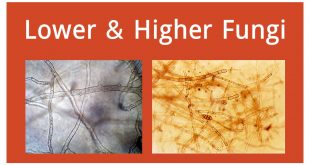
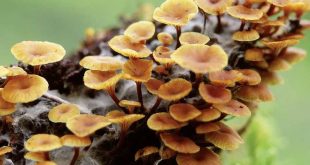
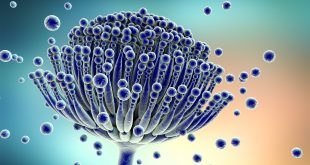
Biologists use the term ‘fungus’ to include eukaryotic, spore-bearing, achlorophyllous organisms that generally reproduce sexually and asexually. They are usually made up of filamentous, branched somatic structures which are typically surrounded by cell walls containing chitin or cellulose, or both of these substances. The fungi originated as a distinctive group …
Read More »An Introduction to Fungi
A fungi is a group of eukaryotic heterotphic organisms members of which have chitinous cell wall and are differentiated from other living organisms by their special vegetative structure and nutrient intake. Members of this group include yeast, rusts, mildews, molds, mushrooms etc. Mycology The discipline of bioscience that deals with …
Read More »Identification Of Ascomycetes: The Sac Fungi
In the kingdom Fungi, there are two major phyla- Ascomycota and Basidiomycota. These two together form a subkingdom of fungi named as Dikarya. They together were named such as members of both phyla maintain most part of their life cycle in dikaryotic stage meaning each cell contains two genetically different …
Read More »Difference Between: Plant Pathology
This series includes the difference tables between Localized fungicide and Systematic fungicide Localized infection and Systematic infection Soil borne fungi and Seed borne fungi Eradication and Crop rotation Obligate parasite and Facultative parasite Plant quarantine and Crop rotation Nature culture medium and Synthetic culture medium Primary inoculum and Secondary inoculum …
Read More »Sugarcane disease: Red Rot
Red rot of Sugarcane Red rot is one of the major diseases of sugarcane found in many areas of the world. It was first described in 1983. Pathogen Colletotrichum falcatum Get Free Netflix Now Best safe and secure cloud storage with password protection GPL Themes For Free Get Envato Elements, …
Read More »Disease of Wheat: Black Rust and Loose Smut
Black rust of wheat Host Triticum aestivum Pathogen Puccinia graminis-tritici Symptoms Rust infection is observed in leaves, leaf sheaths, stems, floral structures in the form of rust pustules. Reddish brown pustules appear during the formation of urediniospore. Black pustules appear during the formation of teliospore. On maturity, the teliospore …
Read More »Pathogenicity Test: Diagnosis of an Unknown Fungal Disease
For diagnosis of plant disease, it is essential to determine whether the disease is caused by a pathogen or an environmental factor i.e. abiotic factor. It is also important to know whether the disease is infectional or non-infectional. Diagnosis of a disease caused by either a virus, viroids, rickettsia or …
Read More »Importance of Crop Disease in Agriculture
Plant diseases affect the existence, adequate growth and productivity of all kinds of plants. A diseased plant is a plant that cannot carry out all the physiological functions. So, the importance of plant diseases in the agriculture sector is very significant. In the developing countries, 50-80% of the population is …
Read More »Classification of Plant Diseases
Based on causal agents Infectious or biotic plant diseases. Non infectious or abiotic plant diseases or physiological disorder. A. Infectious diseases A disease that is caused by pathogens which can spread from a diseased to a healthy plant. They are caused by animate factors. Viral disease: Witches broom. Bacterial disease: …
Read More »Ascomycetes : An Introduction
INTRODUCTION Ascomycota is a phylum of fungi classification containing a compartmentalized mycelium, a dikaryotic life stage in the life cycle, plectenchymatous structures associated with spore production, conidia, and sometimes complex dispersal systems. The primitive morphological character that distinguishes members of Ascomycota from all other fungi is the Ascus (pl. asci, …
Read More »
Plantlet The Blogging Platform of Department of Botany, University of Dhaka