Plantlet The Blogging Platform of Department of Botany, University of Dhaka
ASPERGILLUS
Aspergillus was first catalogued in 1729 by the Italian priest and biologist Pier Antonio Micheli.
Viewing the fungi under a microscope, Micheli was reminded of the shape of an aspergillum (holy water sprinkler), from latin spargere (to sprinkle), and named the genus accordingly. Aspergillum is an asexual spore-forming structure common to all Aspergillus species; around one-third of species are also known to have a sexual stage.
Aspergillus is a fungus whose spores are present in the air we breathe, but does not normally cause illness. In those people with a weakened immune system, damaged lungs or with allergies, Aspergillus can cause disease. It is a group of diseases which can result from aspergillus infection and includes invasive aspergillosis, ABPA CPA and aspergilloma. Asthma is also complicated and exacerbated by aspergillus infection (SAFS).
Aspergillus affects humans and birds and animals can also develop aspergillosis, commercially many plant diseases and food spoilage may be due to aspergillus infection.
Occurrence
Aspergillus, genus of fungi in the order Eurotiales that exists as asexual forms (or anamorphs) and is pathogenic (disease-causing) in humans. It is chiefly a saprophytic fungus which is widely distributed. It grows on decaying vegetables; on fatty media such as butter and ghee; on strachy media as bread and rice; on preserved fruits as jams and jellies. It is very commonly found on rotting oranges and phyllanthus fruits. It thus grows on a wide variety of substrate by virtue of the large number of enzymes it produces. All that fungus requires are some organic matter and little of moisture.
Aspergillus, appears in the form of greenish, smoky patches along with Mucor, Rhizopus and Penicillium on moist bread when kept under a bell jar for a couple of days. The other common shades are yellow, black and blue.
In all Aspergillus includes about 200 spp. Majority of these are known only in the conidial stage. A few produce cleistothecia (perfect stage).
Habitat
Aspergillus (commonly known as black mould) is represented by about 100 spp. (Raper and Fennell, 1965) which are widely distributed from Arctic to tropical regions. Species of Aspergillus grow as contaminated in the laboratory cultures as their spores (conidia are present in the air). A large number of species have been found in the soil. Majority of the species are saprophytic an grow on decomposing organic substance such as fruits jams parasites and cause diseases of animals and human beings Aspergillus can be grown easily by keeping a piece of cheese or bread in a warm moist chambers.
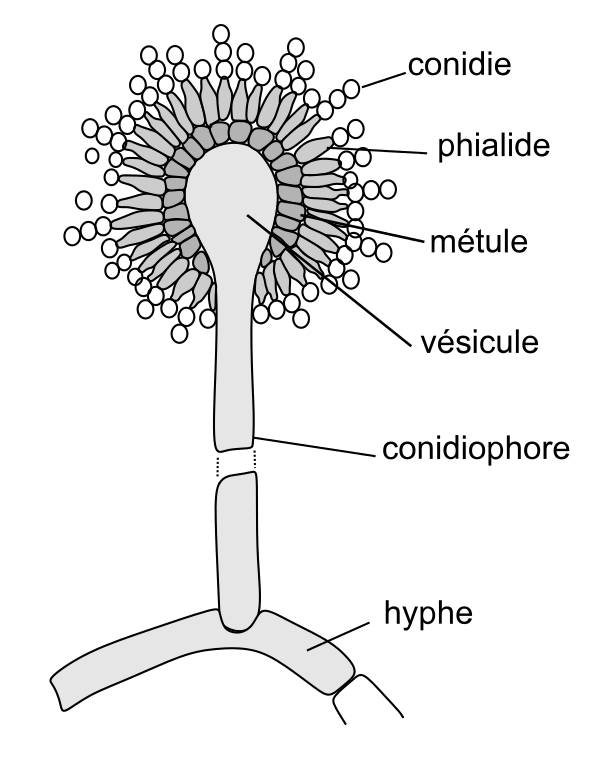
Reproduction
In Aspergillus both sexual and asexual reproduction is seen. The sexual and asexual stage respectively known as perfect stage and imperfect stage. Vegetative reproduction also seen in here.
Imperfect stage (Asexual reproduction)
When the Aspergillus is still young and vigorous, the mycellium of it produce many conidiophore. Conidiophore arise from a hyphae singly. The cell components or the cell from which conidiophore arise is called foot cell. Conidiophore is long and erect and at top there is a vesicle. Two types of sterigmata found when thereis two layer of sterigmata. The lower and upper sterigmata is called primary and secondary sterigmata respectively. At the tip of sterigmata there are conidia and asexual reproduction of Aspergillus is occurred by conidia.
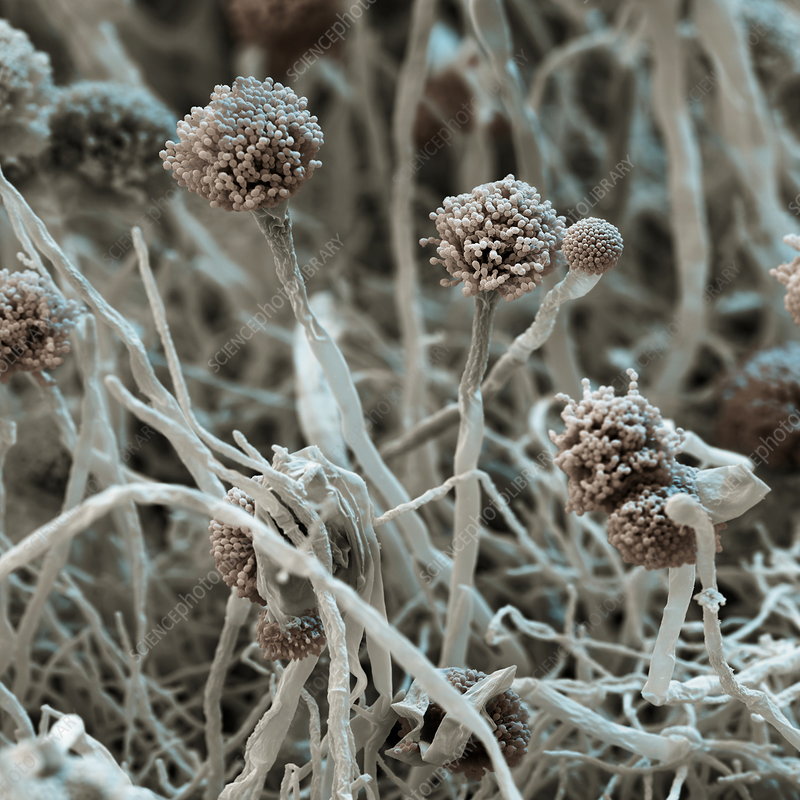
Perfect stage (sexual reproduction)
4 types of perfect stages are present.
- Eurotium
- Sartorya
- Emericella
- Hemicarpentales
Eurotium: Sexual stage is clear. Sexual reproduction by gametangial contact. Antheridium and archaegonium are present and both are multucleated. Typically ascocarp is cleistothecium. Peridium is one layer first but later it may be two or more layers. Outer layer is made up of pseudoperenchyma cells. Asci are irregularly arranged within ascocarp.
eg. Aspergillus niger.
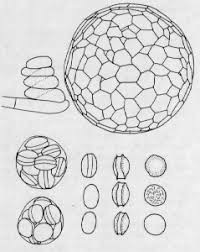
Sartorya: Peridium is made up of interwoven hyphae. It looks like a cotton ball.Functional ascogonium present but no antheridium. The ascocarp is cleistothecium type. There is no cellular structure of pseudoparenchyma cell. Asci are yellow colour .
eg. Aspergillus fumigates.
Emericella: Both antheridium and ascogonium are present. So reproduced by hyphae. Peridium is thick walled composed of hulle cell.
eg. Aspergillus nidulans
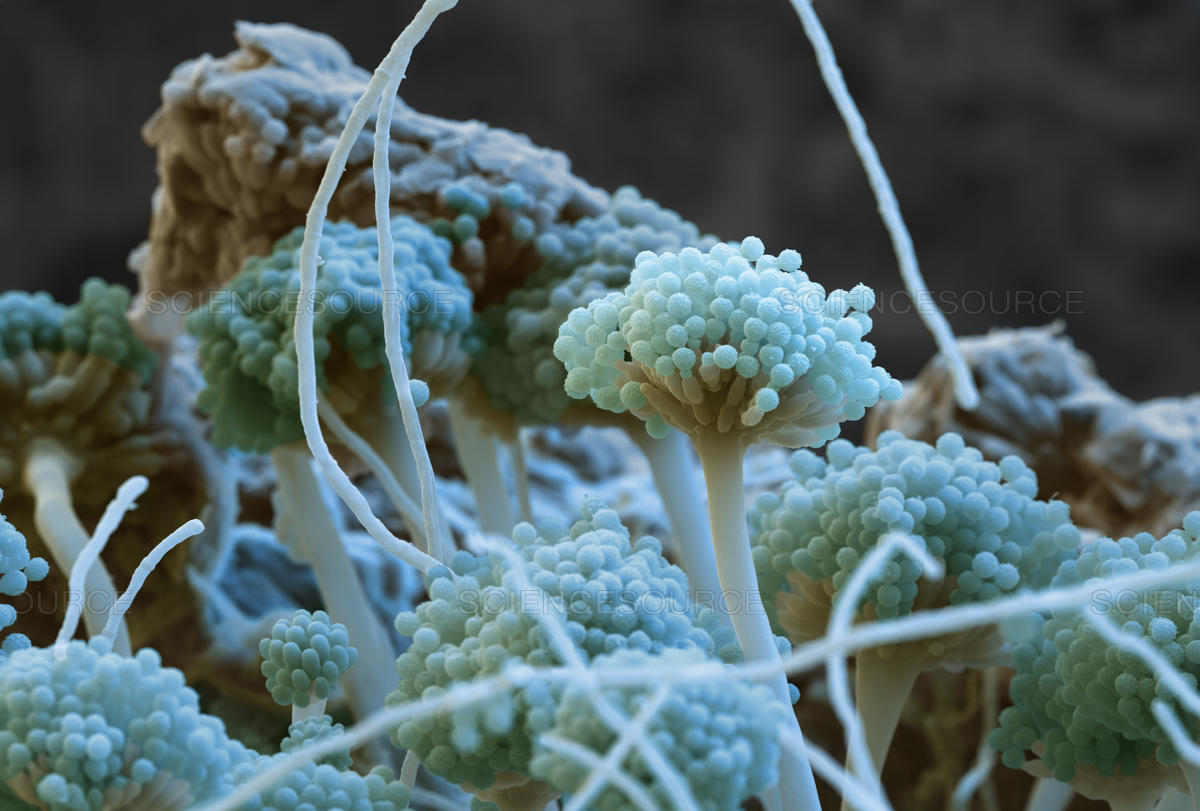
Figure: Aspergillus nidulans fungus.
Hemicarpentales: Both sexs are absent. Asci are double layers which leyers of one or two chambered ascocarp. Ascocarp more or less like sclerotium.
eg. Aspergillus alliaceus.
Economic Importance
The species of genus Aspergillus are of great importance to us in many ways, since they are both useful and harmful.
A. Useful activities:
- Antiboitic:
Some species of Aspergillus produce antifungal and antibacterial antibiotics,such as;
Proliferin : A. prolifarin
Fumigalin: A. fumigatus
Terrein : A. terreus
Flaviein : A. flavus
Ustin : A. ustus
Patulin : A. clavatus
2. Bio assay:
A. niger is used to treat the soil for the tracing of elements like copper. It can detect copper even in traces. A. virens is used to detect arsenic in agriculture soils.
3. Organic acids:
Many species of Aspergillus are used to produce organic acids ,such as;
Citrus acid : A. niger
Gluconic acid : A. fumaricus, A. niger
Gallic acid : A. gallomyces , A. niger
Itanoic acid : A. itaconicus , A. terreus
Kojic acid : A. oryzae , A. flavus
4. Vitamins:
Many species of Aspergillus e.g. A. gossypii are good sources of vitamins ,such as ; Riboflavin(Vitamin B1).
5. Alcoholic Beverages:
A. oryzae is used for fermenting rice to produce ‘Sake’wine and in making ‘miso’ and ‘soja’ souces.
6. Destruction of wasted organic products:
Majority of the species of Aspergillus are saprophytic. These species remove litter and wastes.
B. Harmful Activities:
- Spoilage of food and other Articles:
Aspergillus is one of the most frequent contaminates of food saprophytic species of Aspergillus grow commonly on food, stuffs, leather, paper, fibre etc. The most common species are A. niger, A. flavus etc.
A. repens : causes ‘Button formation’ in canned condensed milk.
A. glaucus : Spoils bread and makes it ‘musty’
A. niger : A. calavatus spoils meat.
A. oryzae : Spoils cocoa,butter
A. fumigatus: Deterioration of rubber.
2. Diseases of Human Beings:
Many species of Aspergillus e.g. A. flavus , A. niger, A. fumigatus parasitze man.They cause a number of diseases grouped under the name Aspergilloses( Singular: Aspergillosis). Aspergillosis is a lung disease and appears to be similar to tuberculosis.The conidia of Aspergillus remain in the air and causes allergy to human beings. They also infect the human ear and cause otomycosis disease.
3. Diseases Of Animals :
In chickens species Aspergillus cause; ‘Brooder’ pneumonia of lungs.
4. Diseases Of Plants:
A. niger causes fruits rot pomegranate, mango, wood, apple, date etc. crown rot disease in ground nut, bull rot in cotton etc.
5. Contaminant Of Culture Media:
Aspergillus niger popularly known as the ‘black mould’ is considered as a ‘weed of laboratory ‘as it often contaminate the bacteriology and mycological cultures.
6. Toxic Substrate :
A. flavus produces a carcinogenic fungal toxian alfatoxin.