Plantlet The Blogging Platform of Department of Botany, University of Dhaka

All factors, providing energy in environment or factors, regulating rates of various metabolic and catabolic processes of organisms called physical factors or rate limiting factors.
What is the soul source of solar energy ?
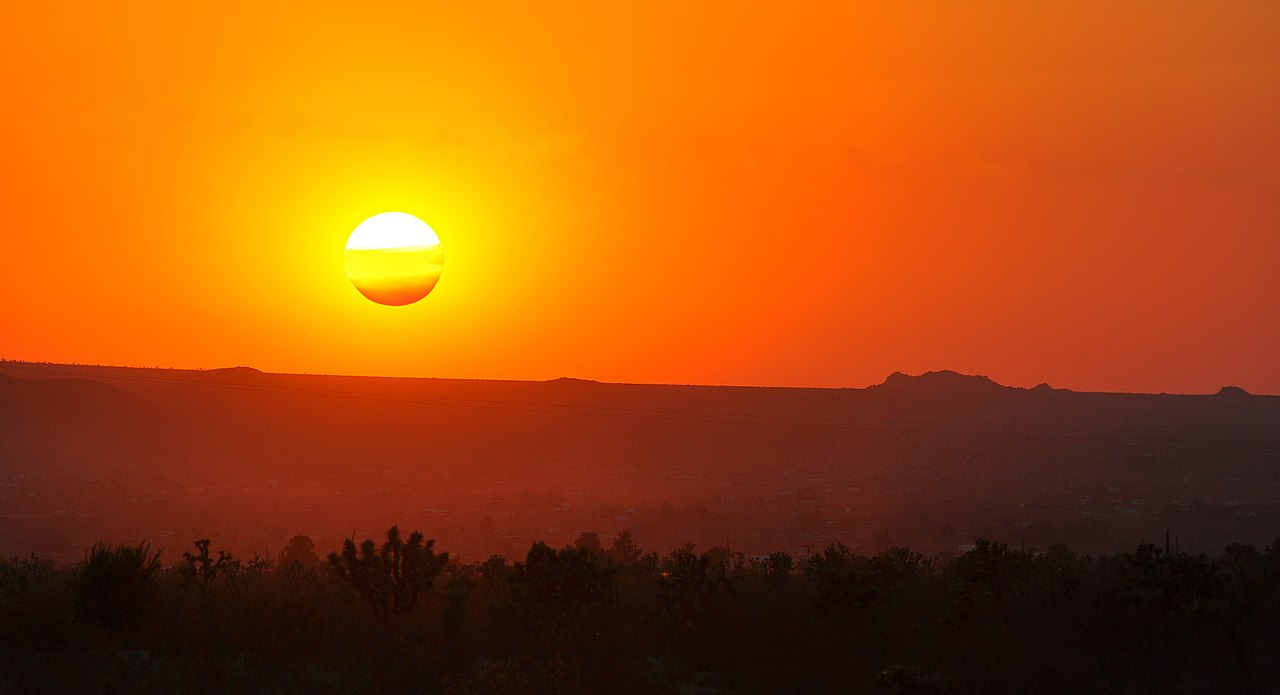
Firstly, the sun is the extremely powerful energy source. Sunlight is the largest source of energy received by earth. Because energy is produced by the nuclear fission in the surface of the sun. But, its intensity at Earth’s surface is actually quite low. This is essentially because of the enormous radial spreading of radiation from the distant Sun. The sunlight that reaches the ground consists of nearly 50 percent visible light, 45 percent infrared radiation, and smaller amounts of ultraviolet and other forms of electromegnetic radiation.
The potential for solar energy is enormous. Since about 200,000 times, the world’s total daily electric-generating capacity is received by Earth every day in the form of solar energy. Stars emit light 1/50,000th of that of solar energy. Moon emits light 1/30,000th of that of solar. Light from moon and stars can only aid migration, movement and breeding of some aquatic animals. So, its proved that, Light(Sun) is the soul source of solar energy.
Best safe and secure cloud storage with password protection
Get Envato Elements, Prime Video, Hotstar and Netflix For Free
Best Money Earning Website 100$ Day
#1 Top ranking article submission website
Light
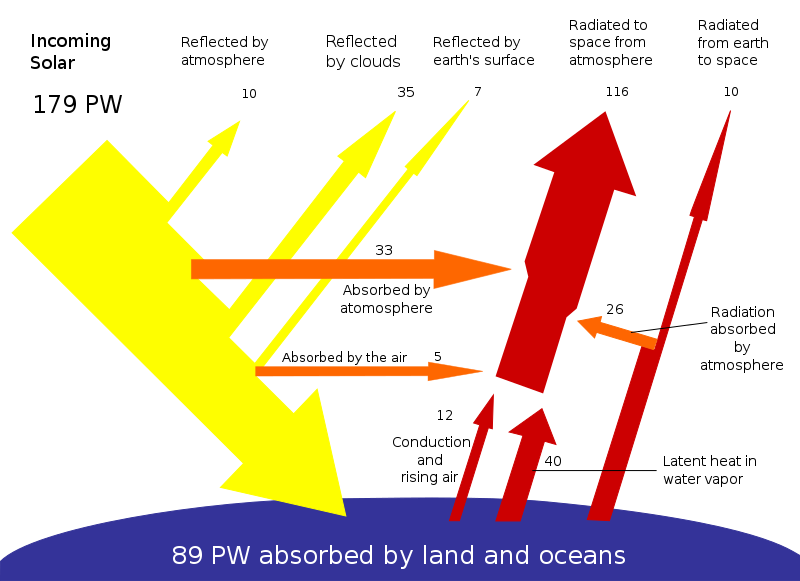
Light is electromagnetic spectrum which expressed as frequency and wave length kinetic solar energy. It is potential energy as usable organic matter. Light is electromagnetic radiation that can be detected by the human eye. Visible light is usually defined as having wavelengths in the range of 400–700 nm, or 4.00 × 10⁻⁷ to 7.00 × 10⁻⁷ m, between the infrared and the ultraviolet.
Light- electromagnetic
spectrum, expressed as
frequency and wave length
kinetic energy (solar) → potential energy as usable
organic matter → food chain
and material recycling
• In lake ecosystem organic
matter could be of two types
– autochthonous i.e.,
produced within lake
– allochthonous i.e.,
produced outside lake but
brought in by various forces
such as wind, rainfall, etc.
• Total radiation falling on
water body between 300 and
3000 nm, made up of three
fractions namely, direct,
indirect and global
• Indirect radiation consists of
reflected light via sky, soil,
mountain, dust particles,
water, ice, etc. ~20% of
global radiation
• On the other hand, global
radiation = (direct radiation +
indirect radiation).
Direct radiation Indirect radiation Total radiation
Solar radiation consists
– ultra-violet region, 300-380 nm
– visible region, 380-750 nm
– infra-red region 750-3000 nm
• photosynthetic active radiation (PAR)
ranges between 380 and 750 nm.
• so-called white light, we see by our naked
eye.
Role of light in aquatic ecosystems
• add primary production
• produce thermal stratification and mixing
• generate temperature in water
• helps absorption and distribution of
biogenic gases and nutrients in water
Light and water: Light falling on surface of water
subjected to three processes:
(a) reflection – depends on sun’s position, day,
time and season. In Europe loss of reflection
3% in summer, 14% in winter
• surface reflection of light can be calculated by
Fresnel’s formula
• R = 1⁄2 [{sin2 (i-r)/sin2(i+r)}+{tan2(i-r)/tan2(i+r)}]
• Where,
• i=angle of incidence
• r=angle of refraction
(b) scattering – light scattered selectively
after its penetration in water.
• Radiation retained called extinction,
emerges called transmission
• Percentile absorption –percentage of
incident light held back by 1 m water depth
• Percentile transmission –percentage of
incident light transmitted to next depth after
1 m.
In distilled water ~ 50% in case of day light.
Underwater light climate: dependent upon
percentile transmission properties
to assess light climate, determination of
vertical extinction co-efficient helpful.
• expressed either by Gr. letter epsilon (ε) or
EC
• Underwater light climate inversely
proportional to EC value
Lambert Beer’s Law calculates EC
Iz=Ioe-ελz
where,
Io=amount of light present on water surface
Iz=amount of light present at a definite depth
Z=depth in m
ελz=extinction coefficient of light at a definite wave
length and depth
ε=(lnIo-lnIz)/z
=(1/z)ln(Io/Iz)
result will be in ln unit/m.
Higher the value, lower the light climate.
In reality-
ελt=εw+ εd+ εp
or
ελt=total EC
εw= EC affected by water molecules
εd= EC affected by dissolved substances in water
εp= EC affected by suspended particulate matters
of water
Heat Budget
When beams of light pass through water
column its energy absorbed by w, d and p
and transformed into thermal energy,
measured as water temperature.
However, heat budget means thermal
capacity and heat gain and heat loss for
one year in water body.
Heat capacity – amount of heat released in
calorie from its highest temperature to 0°C
via cooling or other way round.
• In many lakes water temperature never
reaches 0°C or 4°C.
• data on highest and lowest temperature at
different depths used for calculating heat
budget
Birgean Heat Budget in dimictic lake can be
explained as follows
• Summer heat gain (θs): amount of heat
required to reach highest temperature from
its isothermal condition i.e., 4.0°C.
• Winter heat gain (θw): amount of heat
required to reach isothermal condition i.e.,
4.0°C from its lowest winter temperature
Annual heat budget (θa)
First calculate product of Az (θsz –
θwz), then plot the information
against depth in meter on
millimeter paper
By calculating area of curve and
dividing product by total area
(Ao) of water body in cm2 gives
annual heat budget of lake in
Kal/cm2/y
Calculated heat budget of different water bodies
Name of the Lake Heat Budget in Kal/cm2/y
Lake Baikal 65500
Michigan Lake 52400
Lunzer Untersee 13700
Lanao 7250
Ranu Klindungan 3410
Hula 2240
SH-pond, DU 4048
Heat balance of flowing water
Similar to lakes heat budget of flowing
water depends upon
Direct factors affecting properties of flowing
water
– Geometry of water mass i.e., depth
and width of free surface (h)
– Density of water (ρ)
– Specific heat of water (c)
Indirect factors affecting properties of flowing
water with surrounding environment
– Direct sunlight (S)
– Diffuse radiation (D)
– Effective back radiation (E)
– Evaporation or condensation heat (V)
– Heat exchange with the air (L)
– Heat exchange with the soil (B)
Considering these factors an equation for
change in water temperature/time can be
formulated
dT/dt = (1/hρc)(S+D-E±V±L±B)
In summer, if source temperature of flowing
stream having shallower depth lower than
air temperature, value of L and B take high
positive figure
• This day time heat income not given up
totally at night time but holds within water
• In this way water gets warmed and lost
only in lowering of winter temperature.
• Tropical streams has temperature range
25-30°C with an yearly change by 1°C.
After temperature maximum streams can be
classified as follows
Type Temp. range in °C
Cold streams
(summer-cold)
0-17
Temperate streams
(summer-warm)
17-29
Warm streams 29-40
Hot springs and
streams
>40
Albedo – light reflected by different surfaces
(such as water, ice, mountain, buildings,
forests and other objects present in
catchment of water body) and returns to
lake system again.
albedo depends on: angle of sun, floating
particles, oils on surface, wave action,
snow, ice cover
• Lake Tahoe, Secchi depth under calm condition ~
30 m, reduced to 18 m when wind blows and
creates wave.
• Lake Vanda ~14 – 20 % of incident light could
penetrate ice cover and reach up to 4 m depth.
Water colour
• Pure deep water looks blue because blue part of
visible spectrum penetrates deep
However, in nature we see varied color of waters
such as green, red, blackish, yellow
Water color – two different types
(i) apparent –forms due to falling
light and suspended matters
(ii) real – sestonic (suspended
matters) parts of natural water
separated by Millipore membrane filter
(pore ø, 0.45 μm) filtrate gives
real water, mostly colorless
Reasons of water color
• Red – purple sulfur bacteria
• Light red – Artemia bloom
• Reddish – Oscillatoria rubescens when grows
abundantly
• Blood red – bloom formation by Euglena sanguinea
• Deep yellow – bloom formation by a dinoflagellate
Ceratium
• Green – bloom formation by Carteria, Euglena,
Chlamydomonas, etc.
• looks blackish if surrounded by dense forest or dense
macrophytic vegetation prevail
• Presence of fine grains of calcium carbonate in water
gives bottle green impression of water.
Thermal stratification and mixing
• temperature of natural water
generated by absorption of
solar radiation
• depends upon physical,
chemical and biological
properties of water and follows
an exponential increase relative
to its light path.
• 90% of radiation at 750 nm
wavelength absorbed by 1 m
depth, only 1% goes to next
depth
• So, distribution of heat not uniform through
vertical column of water in most of months
of year
• At mid-summer stage of almost all deep
lakes (>10 m) vertical distribution of
temperature found variable according to
depths
• This pattern of temperature distribution
called thermal stratification
If solar radiation would be main cause of
temperature distribution in water, there would
have been similarity between depth vs.
radiation and depth vs. temperature curve. But
it is not so, can be explained as follows:
(a) 99% of radiation absorbed by top 10 m of water
(b) after 12 m, appears sharp decline in
temperature with increasing depth (@ 1 °C
drop for increase 1 m depth), this trend
decreases after 20 m
(c) because of above mentioned facts
whole water column could be
divided into three distinct layers
– epilimnion : temperature at
higher scale, uniform and
indicates well mixed situation of
water (mainly wind driven).
Absorbs most of solar radiation,
becomes heated up and lighter.
This warm water mixes well by
wind. Density of water in
epilimnion low but remains
uniform
– metalimnion or thermocline: uniform fall
in water temperature evident (1.0 oC per
1.0 m depth increase), density non-uniform
and whatever temperature gained in this
zone can not be dissipated
– hypolimnion: temperature is in lower
scale, uniform, cold, heavier
• Doing depth-wise vertical measurement of
temperature in mid-summer state of deep
lake, above mentioned situation will be
visible.
At this stage whole water column remains
stagnant i.e., no circulation occurs,
therefore, nutrients released via
decomposition in bottom can not come up
to epilimnion for new primary production.
Overturn: means mixing of
whole water column
After summer stratification
over, air temperature
starts falling as autumn
advances, topmost water
temperature becomes
similar to bottom
temperature, slight wind
pressure cause whole
water column mixing
because absence of
density gradient
it helps to mix up all essential nutrients for
new primary production in epilimnion
Lake classification depending on overturn
• overturn and stratification determine
biology and ecology of lake ecosystems,
classification proposed based on it
• Lakes where two mixing occurs, one in
autumn and another in spring followed by
two stratifications (in summer and in
winter) are called dimictic lakes
• However, not all dimictic lakes of world are
same, may be varied
• Classification proposed byF.A. Forel.
Temperate lakes – undergo mixing two times
in a year with intermittent stratification
• Tropical lakes – water temperature never fall
below 4oC, remain always stratified except in
winter when overturn occur
• Polar lakes – whose water temperature never
rise above 4oC, remain always stratified except
in summer when overturn occur
• Stated classification mainly based on
geographical latitudes, exceptions found
elsewhere
• e.g., lake in temperate country shows
characteristic features of tropical lake
• So, Hutchinson (1955) and Hutchinson and
Löffler (1957) proposed another
classification depending on overturn
1. Amictic lake – covered by ice all through,
located in higher altitudes, Antarctica, no
circulation occurs, light penetrated through ice
cover – principal source for metabolism. Lake
Vanda and Bonney of Antarctic.
2. Cold monomictic – water temperature never
rise above 4oC, one circulation may occur
during summer when maximum water
temperature lie close to 4oC. Remain stratified
for rest of period, e.g., Lake Shradder, Alaska,
etc.
Lake Vanda, Antarctica
Lake Shradder, Alaska
3. Dimictic lake – undergo overturn (in spring and
autumn) and stratification (in summer and
winter) simultaneously two times per year,
present in north Eurasia and America. Castle,
Mendota, Wisconsin, etc.
4. Warm monomictic – water temperature never
fall below 4oC, in summer remains fully
stratified condition however, in winter overturn
occur at temperature close to 4oC. For example
Bodensee, Lago de Maggiore, etc.
Lago de Maggiore, Italy
Bodensee, Germany
5. Oligomictic – found in less cold climate,
overturn very few and irregular, tropical
deep lakes where some difference of
temperature between bottom and upper
water exist under stratified condition,
however, sudden change in weather to
cold, homoeothermic condition appear
and overturn occurs.
Equatorial lakes of humid climate.
6. Polymictic – repeated overturn occur.
These may be of two types
(a) cold polymictic – mixes
frequently at or close to 4oC,
equatorial lakes exposed to
low humidity but high wind
velocity and less seasonal
temperature fluctuation.
Some situated at higher
altitude, store heat at day
time but after sudden fall in
temperature at night
circulation occurs, e.g., Lake
Titicaca (Bolivia) situated at
an altitude of 3812 m.
Lake Titicaca (Bolivia)
(b) warm polymictic – tropical lakes which
undergo frequent mixing at temperature
above 4oC
seasonal temperature difference very low
therefore thermal stratification weak.
Under such situation strong wind breaks
stratification, lake undergo circulation
BD 20°-26° north
Meromictic lake
All dimictic lakes holomictic
because undergo complete
mixing. Besides, there exists
another group of lakes
whose water never mixes
fully i.e. top mixed water
layer (mixolimnion)
separated by steep density
gradient known as
chemocline, beneath which
remain non-mixing layer
monimolimnion
Causes
• Intrusion of saline water into freshwater
• absorption of heat energy by bacterial plate
grew in deeper water layer
• intrusion of spring water with high
conductivity in deeper region
• Lake Tokke, Norway remains meromixis
6000 years.
3-types
Ectogenic – occurs due to external reasons
• tidal upsurge in coastal region, saline
water enters into freshwater vis a vis
• Application of salt in highways for deicing
during winter season cause meromixis in
lakes adjacent to highway
(ii) Crenogenic – spring water containing high
minerals emerges in deeper part of lake may
cause meromixis, because density of such water
will be higher and will make barrier against
mixing
(iii) Biogenic –salts, minerals released via
decomposition of old primary production in
hypolimnion of lakes produce chemocline
Sometimes bacterial plate growing in deeper
layer may absorb heat and cause temperature
inversion
Water movement and flow
• Help distributing biogenic gases, minerals
in epilimnion.
• Water of lakes, haors, baors, ponds, etc.
are not stationery.
• Sometimes water movements visible as
waves and currents
• If currents, waves, not visible, water body
may be still in motion because of
convection currents
• Primarily wind main force causing water
movement and mixing
• Besides, water temperature and density
also responsible for some sorts of water
movement
• Wind and density jointly effect water and
produce biological and chemical gradients
in it
Flow of water – dependent on
basin morphology, slope,
roughness and smoothness
of basin and velocity of water
• If water flows on smooth
surface uninterruptedly called
laminar
• water flows onto rough
surface, flow resisted, wave
produced, called turbulent
• turbulent flow forms vortex,
eddies; cause mixing of
nutrients, gases in water
• Reynolds number – calculating Reynolds
number, events laminar or turbulent flow of
water detected
• Re =Ud/v, where, U = velocity of current, d
= depth, v = kinematic viscosity of water
• Reynolds number goes below critical value
i.e., Re = 500 then laminar flow
• value Re ~ 2000 then turbulent flow
• e.g., in one lake value of U = 10 cm/sec, d
= 10 m and v = 0.01cm2/sec.
• solving equation Re = 106 obtained which
is higher than 2000 and therefore flow is
turbulent
Seiches: derived from French ‘Seche’
means ‘dry’, designates dry area formed
due to fall and rise in water level
Causative agents
• earth’s geotropic movement
• fall and rise of barometric pressure
• sudden rainfall in one part of large lake
• strong blow of wind in one direction over
any lake may pile up water
• When action of any such causal event
diminishes then piled water starts sinking
causing mixing
Seiches may be calculated
T = 1/n × 2L/√gz
Where,
T = resonance period
z = depth
n = number of nodes of the standing wave
L = basin length.
Langmuir circulation: noticed
in large lakes on windy day
as lines of foam called
windrows oriented in same
direction as wind and at right
angles to waves
• These lines mark
boundaries of pairs of
Langmuir spirals, series of
adjacent vertical clockwise
and counterclockwise
rotating cells of water
• produce alternate areas of upwelling and
downwelling zone
• Windrows, also called slicks, contain algae
and zooplankton as well as oily substances
or natural foaming agents from death and
decay of plankton or shoreline vegetation.
• Langmuir – type of circulation due to
interaction between surface waves and
wind-driven drift currents
• Langmuir spirals produce measured
downwelling flows between 2 and 8 cm/
sec.
• considerably faster than swimming of most
zooplankton or algae
• Langmuir spiral may rapidly mix plankton,
heat, or dissolved gases throughout
epilimnion
• important feature of these rapid vertical
movements effect algal photosynthesis and
zooplankton
• Daphnia may concentrate in slicks, presumably
offsetting disadvantages of being eaten there
against advantages of concentrations of food in
form of algae and bacteria
• inhibition of algal photosynthesis by exposure to
surface light intensities well known and rapid
mixing in Langmuir spirals may increase light
inhibition and reduce primary production
• system of bottles suspended at fixed depth
normally used to estimate photosynthesis may
not reproduce the natural-light regime
Movement of water in
thermocline
Thermocline forms because of
differences in temperature
and water density so
stagnation results there
• molecular diffusion of water
only hope of water movement
in this zone. But weak
process, even can not help to
recover sudden fall of oxygen
due to zooplankton respiration
and or organic decomposition.
• stagnation attracts some
microplankton, bacteria and
zooplankton to colonize
• new gradients of nutrients essential, problem
minimized by slow resonance internal waves in
thermocline
• Water of thermocline can also move by Internal
gravity waves and short time internal gravity
waves
Movement of water in hypolimnion
• no regular way of flowing water in hypolimnion.
However, coriolis effect, Calvin and Poincare
wave, molecular diffusion, etc. bring some sorts
of water movement in hypolimnion