 Plantlet The Blogging Platform of Department of Botany, University of Dhaka
Typification: The nomenclatural type is that constituent element (a specimen, or a description or a figure) of a taxon to which the name is permanently attached. This need not be the most typical or representative element but is the original material on which the description of the taxon is based. …
Read More »Blog Layout
Light: its source, quality, and underwater quality of light

All factors, providing energy in environment or factors, regulating rates of various metabolic and catabolic processes of organisms called physical factors or rate limiting factors. What is the soul source of solar energy ? Firstly, the sun is the extremely powerful energy source. Sunlight is the largest source of energy …
Read More »Plant Biotechnology
What is Plant Biotechnology? Plant biotechnology can be defined as the use of tissue culture and genetic engineering techniques to produce genetically modified plants that exhibit new or improved desirable characteristics. A Short History of Plant Biotechnology The foundations of modern plant biotechnology can be traced back to the …
Read More »Microtubules: The Skeleton of Cell
Microtubules are part of the cytoskeleton and can assemble into bundles, for example, the cortical microtubules, the spindle and the phragmoplast. Discovery: De Robertis and Franchi (1953) reported the presence of microtubules in cell. Ledbetter and Porter (1963) found microtubules in the cytoplasm and termed as “Cytotubule”. Distribution: Fawcett and …
Read More »Minerals:

Source of minerals Rocks, ores and gems A rock is a mass of one or more minerals or mineral substances. Some rocks, such as limestone or quartzite, are composed primarily of one mineral – calcite or aragonite in the case of limestone, and quartz in the latter case. Other rocks …
Read More »Micro Evolution
The general theory of evolution is that organisms have changed over time. Usually, natural selection keeps things the way they are. This is stabilizing selection (Figure 17.9a and b, and Figure 17.10). Agouti rabbits are the best adapted rabbits to survive predation, so the agouti allele remains the most common …
Read More »Micro-propagation and It’s Commercial Application
What is Micro-propagation? Micropropagation is a method to produce genetically identical plantlets by using in vitro tissue culture techniques. More specifically, Micropropagation refers to the in vitro multiplication and/or regeneration of plant material under aseptic and controlled environmental conditions to produce thousands or millions of plants for transfer to the …
Read More »Production of Secondary Metabolites through in vitro Culture Techniques
Metabolism: (Gr. metabole = change) the totality of the chemical changes in living cells which involves the buildup and breakdown of chemical compounds. Metabolites Primary metabolites: Molecules that are essential for growth and development of an organism. Secondary metabolites: Molecules that are not essential for growth and development of an …
Read More »Monosaccharide : Simple Sugar
General Characteristics The simpliest of all soluble carbohydrate and are known as simple sugar. The building unit of complex carbohydrate Can’t be hydrolised Sweet testing, soluble in water, crystaline Posses a free aldehydee or ketone group General formula CnH2nOn Get Free Netflix Now Best safe and secure cloud storage with …
Read More »Heterospory and Seed Habit
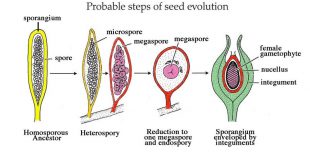
Heterospory The phenomenon of the development of two types of spores (differing in size, structure and function) by the same species is known as heterospory. The two different sizes are smaller spores also known as microspores and the larger spores also known as megaspores. Rashid (1999) listed nine genera as …
Read More »