 Plantlet The Blogging Platform of Department of Botany, University of Dhaka
Unlike other living beings plants are immobile. They have to live at the mercy of nature. If the place they are standing on has a scarcity of water or minerals, they can’t move to a better place. If a tornado or cyclone arrives they can’t escape from it and take …
Read More »TimeLine Layout
July, 2026
-
2 July
Plastids: Characteristics, Types & Functions
Plastid is the membrane-bounded organelle that is the container of the cell. It is the container of some pigments which are the center of some cell activities (mainly the site of photosynthesis). They can move freely. Present in all plant cells but absent in bacteria and fungus. Present in the …
Read More » -
2 July
DEUTEROMYCETES : REPRODUCTION
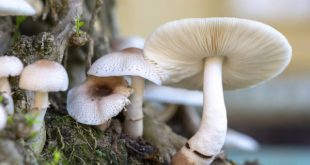
REPRODUCTION OF DEUTEROMYCETES Commonly called molds, Deuteromycetes are ” Second-class ” fungi carrying no sexual state in their life cycle, reproduced by means of special spores known as conidia (sing. conidium) via mitosis. This state of asexual fungi called Anamorph. In other words, this imperfect fungi …
Read More » -
2 July
Aspergillus: An Imperfect Fungus

ASPERGILLUS Aspergillus was first catalogued in 1729 by the Italian priest and biologist Pier Antonio Micheli. Viewing the fungi under a microscope, Micheli was reminded of the shape of an aspergillum (holy water sprinkler), from latin spargere (to sprinkle), and named the genus accordingly. Aspergillum is an asexual spore-forming …
Read More » -
2 July
Ascomycetes: Asexual & Sexual Reproduction
Asexual Reproduction Asexual reproduction in the Ascomycetes may be carried on by fission, fragmentation, chlamydospores, or conidia according to the species and to the environmental conditions. Fission & Budding in Yeast: Fission and budding are methods of propagation normally encountered in the yeasts and in a few other Ascomycetes. Spores …
Read More » -
2 July
Linkage and recombination
Gene mapping The diagrammatic representation of location and arrangement of genes and relative distance between linked gene of a chromosome is called linkage map or genetic map. Unit of genetic map is Morgan or Centimorgan. History Test cross Gene map distance If the percentage of crossing over between two linked …
Read More » -
2 July
For any researcher, the first initiative to carry out and experiment is to select an appropriate experimental design.
Read More » -
2 July
Experimental Design (Part-2): CRD, RBD and Latin Square Design
Previously, basic principles and terminology of experiments have been discussed. There are several methods of experimental designs according to which the researchers follow and carry out statistical analysis. Among them, Completely randomized design (CRD), Randomised block design (RBD), and Latin square design is discussed here. Completely randomized design (CRD) In …
Read More » -
2 July
The Mechanical Tissue: Types, Distribution, and Function
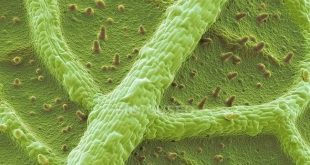
No plant can flourish, or even maintain its existence for long unless it is provided with arrangements that ensure that the plant body as a whole is firmly knit together and that each of its organs is possessed of the requisite degree of mechanical strength. The plants which are made …
Read More » -
2 July
Vascular Bundle: The Conducting Tissue of Plant
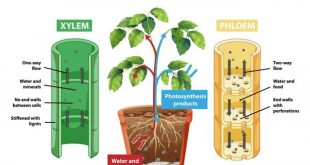
The vascular tissue system consists of a number of vascular bundles which are found to be distributed in the stele. The stele is the central cylindrical portion of the stem and root, commonly surrounded by endodermis, and consists of vascular bundles, pericycle, pith and medullary ray. Each vascular bundle consists …
Read More »