What is “A Marker”? A marker may be defined as a “Mark of identification”. In Biology three major types of markers are used: Morphological markers (also called “classical” or “visible” markers) which are phenotypic traits. Biochemical markers- called isozymes-are multiple forms of enzymes, including allelic variants of enzymes. A genetic …
Read More »Aquatic Angiosperm: Water Finery
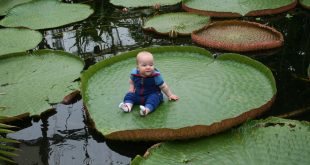
Aquatic plants are species that perpetuate their life cycle in still or flowing water, or on inundated or non-inundated hydric soils. Aquatic angiosperms inhabit oceans, lakes, rivers, end wetlands. The transition to an aquatic life has been achieved by only 2% of the approximately 350,000 angiosperm species (Cook 1990). Bangladesh …
Read More »Medicinal Plants: Classification
Before classification we have to know what is a medicinal plant. There are many definitions. World Health Organisation (WHO) has defined medicinal plants as plants that contain properties or compounds that can be used for therapeutic purposes or those that synthesize metabolites to produce useful drugs (WHO 2008). We can classify …
Read More »কার্জন হলের রত্নরা
ঢাকা বিশ্ববিদ্যালয়ের কার্জন হল, এই নামটার সাথে জড়িয়ে আছে না বলা অনেক স্মৃতি। যখনই ঢাকা শহরের এই যন্ত্রচালিত জীবন অসহ্য মনে হয়, অসহ্য মনে হয় যানযট, সবুজের জন্য খাঁ খাঁ করে মন তখনই এই কার্জনহলে এসে নিজেকে তৃপ্ত মনে হয়। যারা ক্যাম্পাসে সারাদিনই ক্লাস, ল্যাব, মিড, প্রেজেন্টেশন নিয়ে দৌড়ে ক্লান্ত …
Read More »Key: A plant Identifying Method
It is estimated that in the present world, the number of plant species is as many as five million. Among them about 391,000 species of vascular plants-are currently known to science of which nearly 369,000 species (94%) are phanerogamic or flowering plants as other 6% is consisted with cryptogamic or …
Read More »Monocotylidonous Family: Liliaceae
Systematic position According to Bentham and Hooker it is placed under the series Coronaricae. Engler places it under the order Liliflorae. Hutchinson places it under the order Liliales of the division Corolliferae. Distribution The members of the family are cosmopolitan and specially abundant in the warmer parts of the tropical …
Read More »Dicotylidonous Family: Apocynaceae
Systematic position Bentham and Hooker placed it in the sub-class Gamopetalae,the series Bicarpellate and Cohort Gentianales . According to Engler it belongs to the sub-class Metachlymadeae, the sub-order Gentianineae under the order Controtae.Hutchinson places it under the order Apocynales of the Phylum Lignosae. Distribution The family contains about 300 genera …
Read More »Monocotylidonous Family: Orchidaceae
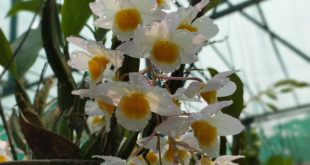
Systematic position According to Bentham and Hooker it belongs to the series Microspermae. Engler places it under the order Microspermae.Hutchinson considers it as belonging to the order Orchidales of the divison Corolliferae. Distribution The family is large and is consisting of over 400 genera and more than 10,ooo species distributed …
Read More »Monocotylidonous Family: Poaceae
Systematic position Bentham and Hooker places this family under the series Glumaceae of the Monocotyledons. According to the Engler it belongs to the order Glumiflorae. Hutchinson places it under the order Graminales belonging to the division Glumiflorae. Distribution The members of this family is cosmopolitan and grow on almost all …
Read More »Euphorbiaceae: The Spurge Family
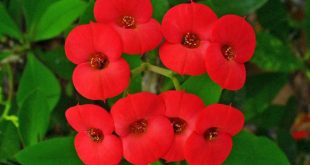
Euphorbiaceae family is very diversified with mostly monoecious herbs, shrubs, and trees and even sometimes succulent and cactus-like members. It is named from one of its member genus ‘Euphorbia‘. This family has about 300 genus and 7500 species all over the world but more often found in warm and temperate …
Read More »
Plantlet The Blogging Platform of Department of Botany, University of Dhaka