 Plantlet The Blogging Platform of Department of Botany, University of Dhaka
Did you know that the average American family spends almost $2,000 a year on energy bills? That’s a lot of money! In this blog post, we will discuss some simple ways that you can save money and the environment by making changes to your home. We will cover everything from …
Read More »TimeLine Layout
December, 2019
November, 2019
-
1 November
Transposable Genetic Elements
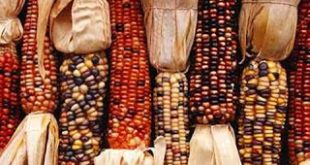
Transposons were first discovered in corn (maize) during the 1940s and ’50s by American scientist Barbara McClintock, whose work won her the Nobel Prize for Physiology or Medicine in 1983. The colourful pattern on maize ears have an important scientific significance. Modern research have shown that the stripes and spots …
Read More »
October, 2019
-
18 October
Cytotaxonomy: Study of Chromosome Behaviour

Chromosome behaviour is an important factor that determine the pattern of variation and taxonomic distinctness. Pairing behavior and subsequent separation of chromosome occurs at meiosis. In reporting results of pairing studies, univalents are represented by Is, bivalents by IIs, etc. Some taxonomic information can be gained from the study of …
Read More » -
17 October
Cytotaxonomy: Study of Chromosome Structure

Study of chromosome structure is very important in cytotaxonomic studies. It includes chromosome size, shape and position of centromere (i.e. arm-length ratio of each chromosome in the genome) Chromosomal size and shape are also important as taxonomic criteria in taxonomy. For examples, The chromosomal ratio if Mediola and Trillium of …
Read More » -
16 October
DNA Replication in Eukaryotes: Linear Replication
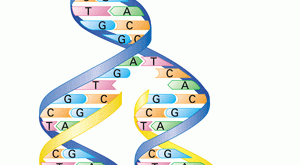
DNA replication in eukaryotes is a complex and unique process involving many enzymes and thousands of ORI at a single time. Unlike the prokaryotic DNA, it involves a linear mode of replication. Why does linear DNA replication involve multiple origins at a time? The large linear chromosomes in eukaryotic cell …
Read More » -
16 October
Replication in Circular DNA: Theta Model
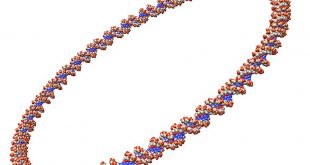
Following Meselson and Stahl’s work, investigators confirmed that other organisms also use semiconservative replication. There are, however, several different ways that semiconservative replication can take place, differing principally in the nature of the template DNA—whether it is linear or circular—and in the number of replication forks. Replicon and Origin of …
Read More » -
15 October
Chromosome Number: A Great Tool in Taxonomic Studies
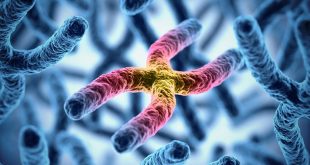
Taxonomy – is the branch of biology that deals with identification, nomenclature and classification of an object. Cytology – is the branch of biology that deals with origin, structure and function of cell. So Cytotaxonomy presumably means the application of cytological data to taxonomy. More precisely we can say Cytotaxonomy …
Read More » -
15 October
Translation: mRNA to Protein
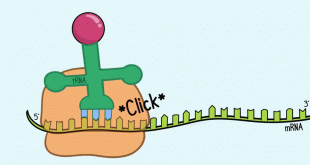
Translation takes place on ribosomes; indeed, ribosomes can be thought of as moving protein-synthesizing machines. A ribosome attaches near the 5′ end of an mRNA strand and moves toward the 3′ end, translating the codons as it goes. Synthesis begins at the amino end of the protein, and the protein …
Read More » -
15 October
Post-transcriptional Modification
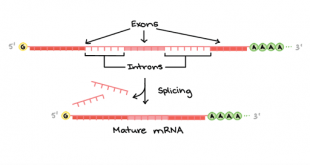
The process of transcription is very similar in prokaryotes and eukaryotes, but there are major differences in the relation between the transcript and the mRNA used for polypeptide synthesis in eukaryotes. In prokaryotes, the immediate product of transcription (the primary transcript) is mRNA; by contrast, the primary transcript (also called …
Read More » -
15 October
Genetic Code
The four bases in DNA – A, T, G, and C are sufficient to specify the 20 amino acids in proteins because each codon is three bases in length. Each sequence of three adjacent bases in mRNA is a codon that specifies a particular amino acid (or chain termination). The …
Read More »