 Plantlet The Blogging Platform of Department of Botany, University of Dhaka
Microbiology is a study that studies a biologically varied group of usually small life forms, primarily bacteria and viruses. More than simply bacterial species were included in the diversity of microorganisms by the end of the classical Golden Age of microbiology. Other fields, in addition to bacteriology and virology, were …
Read More »TimeLine Layout
February, 2022
-
20 February
Bryophyta: Classification and Identification of Bryophytes
Living organisms are classified into five kingdoms by R.H. Whittaker. He classified living species based on cellular structure, manner of nourishment, body organization, reproduction, phylogenetic relationship, and other factors. Monera, Protista, Fungi, Plantae, and Animalia were the five kingdoms. According to the above-mentioned criteria, the plant kingdom has been divided …
Read More » -
19 February
Physiology of Seed Germination
All viable seeds which have overcome dormancy (if any) either naturally or artificially will readily germinate under suitable environmental conditions necessary for seed germination i.e., water, O2, temperature, and in some cases light. The seeds that just wait for suitable environmental conditions to germinate are said to be ‘quiescent’. In …
Read More »
December, 2021
-
9 December
Seed Dormancy: Reasons, Breaking Methods and Advantages
There are several factors that influence seed germination such as temperature, moisture, and seed dormancy. Temperature and moisture levels are fairly easy to explain but what is seed dormancy? All the viable seeds have the capacity to germinate if placed under suitable conditions necessary for germination. In certain plants, such …
Read More » -
5 December
Vernalization: Cold treatment in plants
In the case of some plants, even though they receive proper photoperiod, they do not flower. It means that apart from photoperiodism plants also require something for their subsequent flowering. But what is that? Not all plants flower when subjected to the correct photoperiod. The temperature has a profound effect …
Read More » -
2 December
Economic Botany: Plants as Sources of Economic Products
Economic botany is the study of plants, fungi, algae and bacteria that directly or indirectly, positively or adversely affect man, his livestock, and the maintenance of the environment. The effects may be domestic, commercial, environmental, or purely aesthetic. The direct effects refer to the use of food, fibre, fuel, medicine, …
Read More »
October, 2021
-
15 October
Introducing to Asteraceae family
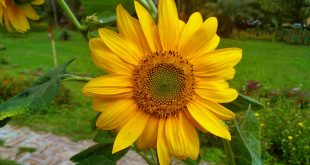
If I say let’s become familiar with the Asteraceae family, probably it will not be so effective but if I say that let’s become familiar with the family of sunflower and dahlia flower it will be better to understand. As we do in the case of identifying a person’s family …
Read More »
September, 2021
-
29 September
Mutation Breeding: Pros, Cons and Achievements of Bangladesh

Mutations are tools to study the nature and functions of genes, as well as to generate raw materials for genetic improvements of crop plants. Many crop varieties with better quantitative, qualitative, and economic value have been developed using it. Recognizing the relevance of this technique in a country’s agricultural development, …
Read More » -
29 September
Experimental Designs (Part-1): Principle and Concept
For any scientific studies, designing and evolving suitable methodology of an experiment in an institution or for an inquiry in the field, need very logical and systematic planning. The knowledge of how experiments come in use and in what way it is to be carried out is discussed below. …
Read More » -
25 September
Stomata: Structure, Types and Functions
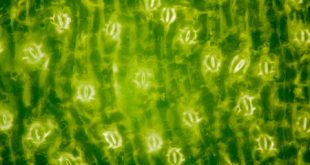
Like all other living beings plants have to exchange gaseous molecules. Animals have noses that help them to breathe in and breathe out to exchange gases. But what about plants? How do plants breathe in and breathe out? Well, plants have stomata or tiny pores on their epidermis that help …
Read More »