 Plantlet The Blogging Platform of Department of Botany, University of Dhaka
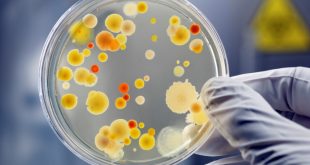
We all agree that classification and taxonomy of organisms are desirable and necessary in cases of biological work. But, there is much disagreement as to the best method of classifying and naming living things. The zoologists and the botanists have arranged matters in their fields fairly satisfactorily, largely on the …
Read More »TimeLine Layout
July, 2021
June, 2021
-
21 June
Marine Phytoplankton: Productivity, Food Chain & Factors
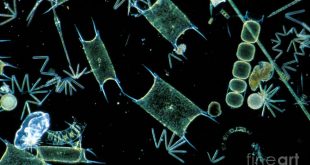
Pasturage of the Sea The vast ocean water is about 99%, of which usually up to 200 m depth or beyond (up to 300 m, depending on the latitudes, seasons, and water transparency) phytoplankton grow constituting “pasturage of the sea”. Their photosynthetic activity contributes about 80% oxygen in the atmosphere …
Read More » -
12 June
Introduction to Marine Botany: Plankton
The word ‘plankton’ has been derived from a Gr. word ‘planktos’ means drifting. So, plankton is those microscopic aquatic organisms or drifters whose movement is mainly driven by water currents, waves, tides, etc. Plankton can be two types- zooplankton, and phytoplankton. Although, some of them might possess some kinds of …
Read More » -
12 June
Marine Botany: Oceans, Seas & Bay of Bengal
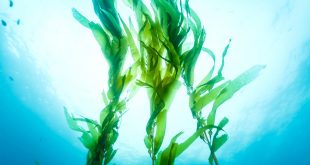
Marine Botany is the study of aquatic plants and algae that live in oceans, seas, intertidal zones and even in brackish water (more saline than freshwater but less saline than true marine environments) of estuarine zones. It is a combined branch of marine biology and botany. According to Wikipedia, Marine …
Read More » -
11 June
Nori Cultivation

The cultivation of nori started about 300 yrs ago around the coast of Tokyo Bay and developed gradually in many localities Bundles of twigs of trees such as oaks, cherry, etc. were set in rows on the ground as the collectors, to which nori spores attach themselves and grow. In …
Read More » -
11 June
Seaweed Cultivation & Algal Industry
Of the global seaweed harvest, 85% – 95% goes to the food industry and is worth approx €4.1 billion per annum (p.a.). The most valuable crop produced by seaweed aquaculture is Nori – Porphyra – a red seaweed or alga. The value of this crop is around US$ 2 billion …
Read More » -
11 June
Toxic Algae & Human Health
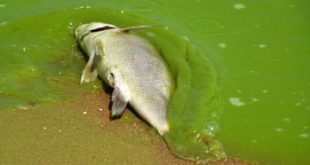
Algal toxins are toxic substances released by some types of algae when they are present in large quantities (Blooms) and decay or degrade. These toxins are called ‘Phycotoxins’ (from Greek, phykos, “seaweed”; and toxikon, “toxin”). They are usually complex allelopathic metabolites produced by algal secondary metabolic pathways. These metabolites are (in most cases) not harmful to …
Read More »
May, 2021
-
16 May
Protected areas of Bangladesh
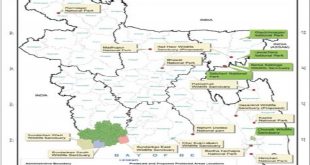
There are 19 protected areas in Bangladesh, covering 2,458 sq. km and representing 1.68% of the land area (FD record as on July 2007). The Forest Department has the mandate for the management of these protected areas. The protected areas are declared in the country under the “Bangladesh Wildlife (Preservation) …
Read More » -
10 May
An Overview of Oomycetes
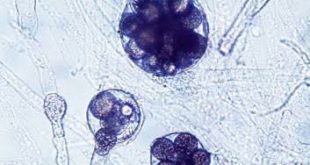
Oomycota: The organisms of Oomycota are not fungi in other words, they are Pseudofungi. They have been recognized as being notably different from the organisms included in the phylum Fungi for a long. As an illustration, in the classical concept, Oomycota species were allied with certain algae. However, because of a …
Read More »
April, 2021
-
23 April
Mucorales: The Largest Order of Zygomycetes
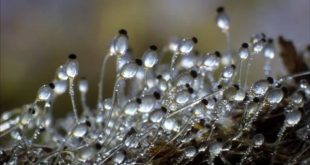
Zygomycetes(Gr. zygos= yoke; spora= seed, spore) are a variant fungal class of the phylum Zygomycota, mostly known as “Pin Molds”, can be found worldwide. There are 450 species which are grouped under 70 genera that make up the class Zygomycetes. The class zygomycetes is named after the thick-walled resting spores …
Read More »