Plantlet The Blogging Platform of Department of Botany, University of Dhaka
Many systems of classification of Gymnosperms have been proposed by different authors. According to the Classification of Sporne (1965), Gymnosperms are classified into three classes. Among them the second one is Coniferopsida.
In the previous article, Orders of the first Class Cycadopsida were portrayed. Click here to see the Article.
In this one, three orders under Coniferopsida will be discussed in detail.
ORDER 1: CORDAITALES
Cordaitales represent the most ancient and primitive order of the class Coniferophyta/ Conferopsida.
Cordaitales are an assemblage of fascinating plants that reveal the historical background of the most dominating group of gymnosperms.
They appeared in the Devonian period and were at their peak of development during the carboniferous period of the Paleozoic Era.
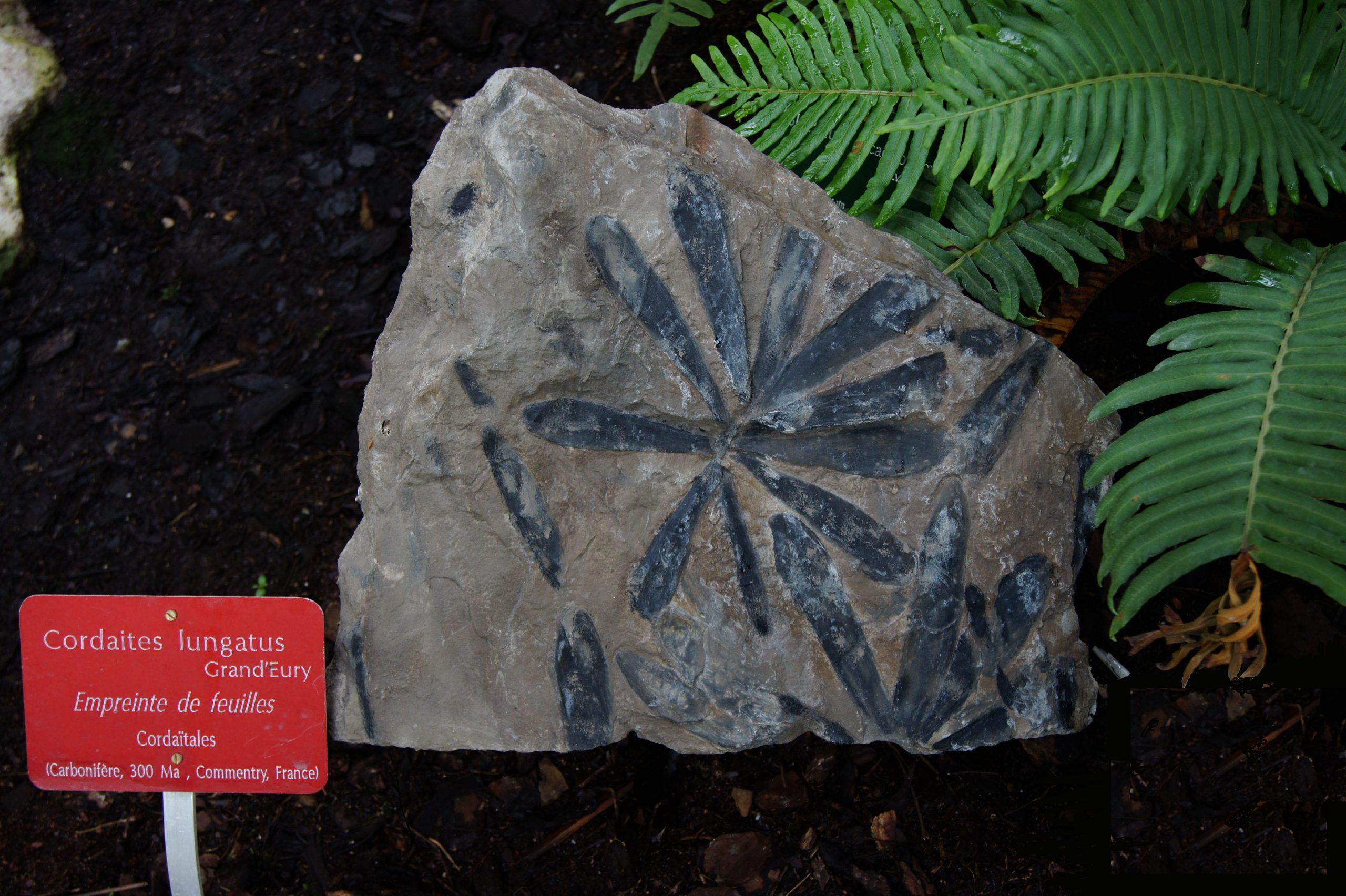
Characteristic Features
- The plants were all trees with slender and branched stems.
- Leaves were simple, subulate, or paddle-shaped.
- Leaves were spirally arranged.
- The venation of leaves was parallel.
- The secondary xylem/ wood is pycnoxylic.
- The strobili were unisexual and compound structures that consisted of a central axis bearing bracts that in turn, bore fertile shoots bearing sterile and fertile appendages.
- Megasporophylls bore four spores.
- Male appendages bore 4-6 microsporangia terminally.
- Seeds were bilateral.
- Presence of endospermic beak in some ovules.
- The nucellus and integuments are free from each other.
- Nucellus is vascularized.
Example: Cordaites michiganensis.
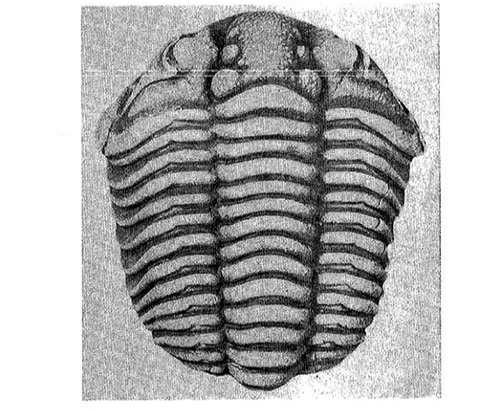
ORDER 2: CONIFERALES
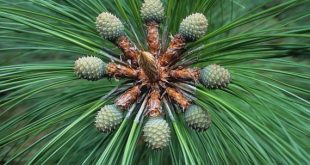
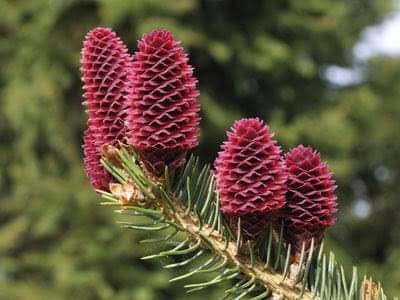
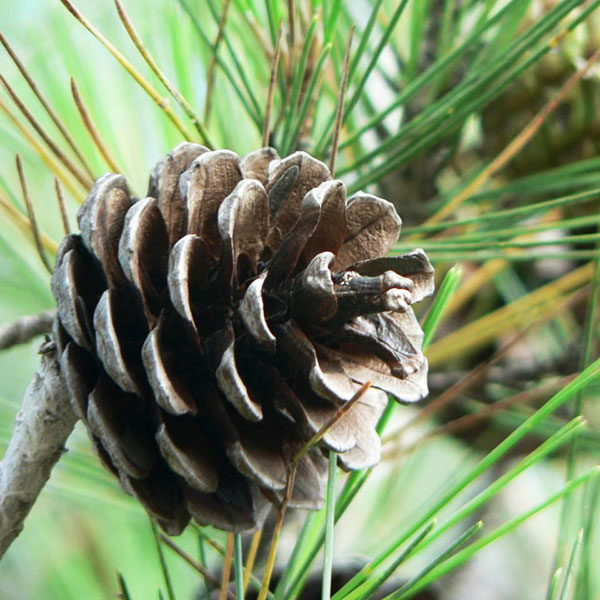
The Coniferales are tall, elegant, and graceful trees with foliage and branches presenting a magnificent cone-like appearance.
They came into existence in the upper Jurassic or lower Cretaceous periods of the Mesozoic Era.
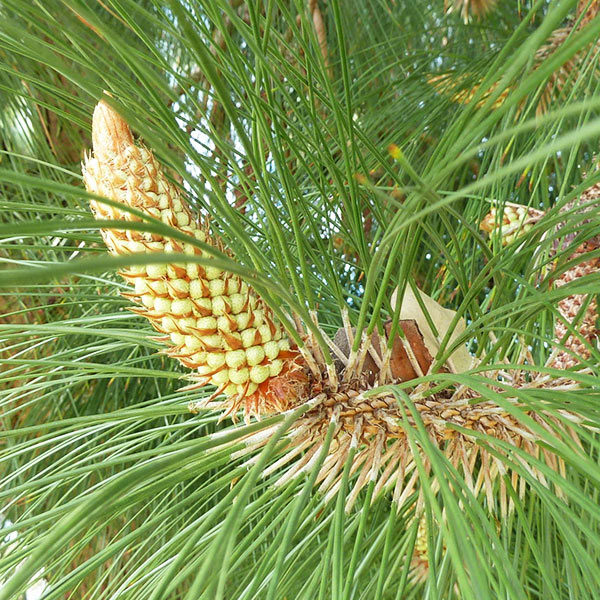
Characteristic features
- Coniferales, commonly known as Conifers are branching woody plants that have usually two types of branches, i) dwarf shoots, and ii) long shoots.
- The root system is an extensively branched tap root system that is infected by mycorrhizal fungi.
- Presence of central mother cells in the shoot apex.
- The bract scale is free from the ovuliferous scale.
- The spiral arrangement of the leaves is primitive as compared to the opposite and whorled arrangement.
- The reproductive organs are
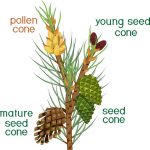 unisexual and form compact cones or strobilli.
 - Female cones are compound structures with a central axis bearing spirally arranged bract scales.
- The female cone is well-developed and longer in size.
- The pollen grains are winged.

Pollen grain - The male gametophyte has several prothallial cells enclosed within the microspore.
- There is no cleavage polyembryony in primitive forms.
Examples: Pinus longifolia
P. insularis.
ORDER 3: GINKGOALES
The Order Ginkgoales came into existence during the Permian period and achieved worldwide distribution and luxuriance existence during the Triassic and Jurassic periods of the Mesozoic Era.
They started to decline during the Cretaceous period and onwards into the Cenozoic Era.
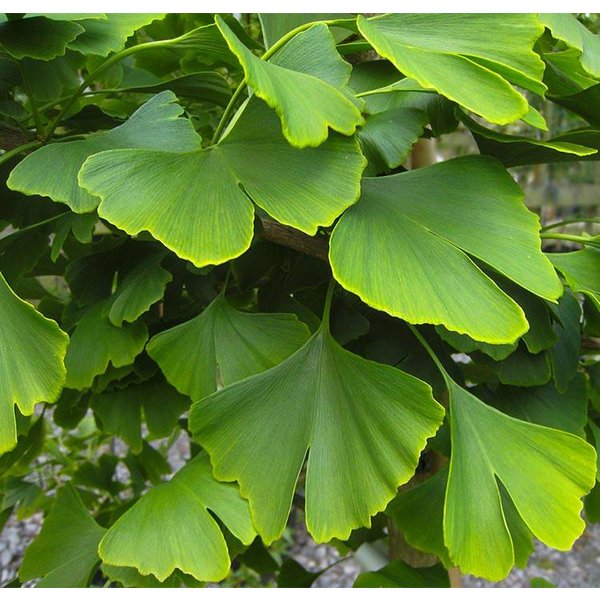
This remarkable order of great antiquity is represented in the present day by a sole survivor, Ginkgo biloba, as a living fossil.
Characteristic features
- They are tall trees.
- Roots penetrate deep into the substratum and constitute a tap root system.
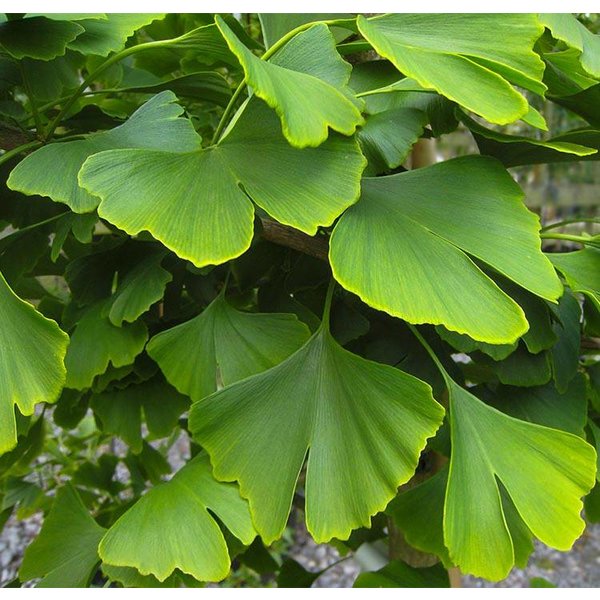
- Leaves are fan-shaped and deciduous.
- The venation is dichotomous.
- Leaves arise singly along the terminal branches and bear bud in their axils that grow into characteristic short shoots.
- Wood is pycnoxylic.
- Catkin-like inflorescences that bear micro sporangiophores with 2-12 pendent microsporangia arise in the axils of leaves on dwarf shoots.
- Ovules arise in groups from the apex of axillary branches.
- The presence of an endosperm tent pole is characteristic of Ginkgo biloba.
- Mature seeds are large and fleshy.
- The spermatozoids (male gametes) are motile and bear a spiral band of cilia.
Example: Ginkgo biloba.
Reference
- Class Lecture of Dr. M. Oliur Rahman,
- Department of Botany, University of Dhaka.