 Plantlet The Blogging Platform of Department of Botany, University of Dhaka
Asexual Reproduction Asexual reproduction in the Ascomycetes may be carried on by fission, fragmentation, chlamydospores, or conidia according to the species and to the environmental conditions. Fission & Budding in Yeast: Fission and budding are methods of propagation normally encountered in the yeasts and in a few other Ascomycetes. Spores …
Read More »TimeLine Layout
July, 2026
-
2 July
Linkage and recombination
Gene mapping The diagrammatic representation of location and arrangement of genes and relative distance between linked gene of a chromosome is called linkage map or genetic map. Unit of genetic map is Morgan or Centimorgan. History Test cross Gene map distance If the percentage of crossing over between two linked …
Read More » -
2 July
For any researcher, the first initiative to carry out and experiment is to select an appropriate experimental design.
Read More » -
2 July
Experimental Design (Part-2): CRD, RBD and Latin Square Design
Previously, basic principles and terminology of experiments have been discussed. There are several methods of experimental designs according to which the researchers follow and carry out statistical analysis. Among them, Completely randomized design (CRD), Randomised block design (RBD), and Latin square design is discussed here. Completely randomized design (CRD) In …
Read More » -
2 July
The Mechanical Tissue: Types, Distribution, and Function
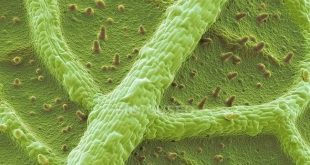
No plant can flourish, or even maintain its existence for long unless it is provided with arrangements that ensure that the plant body as a whole is firmly knit together and that each of its organs is possessed of the requisite degree of mechanical strength. The plants which are made …
Read More » -
2 July
Vascular Bundle: The Conducting Tissue of Plant
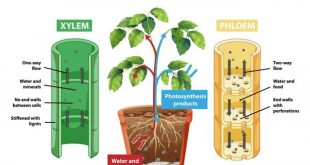
The vascular tissue system consists of a number of vascular bundles which are found to be distributed in the stele. The stele is the central cylindrical portion of the stem and root, commonly surrounded by endodermis, and consists of vascular bundles, pericycle, pith and medullary ray. Each vascular bundle consists …
Read More » -
2 July
Photoperiodism: Flowering in plants (Part 2)
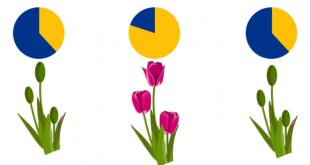
This is the second portion of the topic Photoperiodism. If you have somehow missed the first part, don’t worry! Here is the link- Photoperiodism: Flowering in plants (Part 1) The Pigment Reference: Fundamentals of Plant Physiology by Dr. V. K. Jain.
Read More » -
2 July
Probability in Statistics
Probability means the possibility of a random phenomena.
Read More » -
2 July
হাতিরঝিলে এক বেলা
“হাতিরঝিলে এক বেলা” পলাশ Butea monosperma (L.)mak. শিমুল Bombax ceiba L. কাঠবাদাম Terminalia catappa L. হিজল Barringtonia acutangula (L.) Gaerth. রানীচূড়া Senna polyphylla (Jacq.) H.S.Irwin খেজুর Phoenix sylvestris Roxb. বাগানবিলাস Bougainvillea spectabilis Willd. শ্বেতশিমুল Ceiba pentandra (L.) Gaertn. কামিনী Murraya paniculata (L.) Jack শ্বেত রক্তকাঞ্চন bauhinia variegata var. candida দেবকাঞ্চন …
Read More » -
2 July
DIVISIONS: CYANOPHYTA, PROCHLOROPHYTA, CHLOROPHYTA, CHAROPHYTA
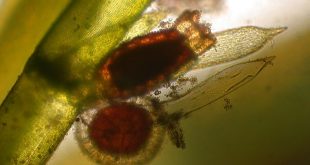
Algae is an extremely diverse group of organisms that make up the lower phylogenetic echelons of the plant kingdom. A precise definition of this group is elusive and they share many obvious characteristics with higher land plants, whereas their distinguishing features from other plant groups are varied and more subtle …
Read More »