 Plantlet The Blogging Platform of Department of Botany, University of Dhaka

Introduction Nucleus is usually the most conspicuous organelle of eukaryotic cell. However, well defined nucleus is absent in prokaryotic cells. Nucleus is the repository of genome and the source of informational macromolecules that govern the synthetic activities of the cytoplasm. Discovery A Dutch Microscopist, Antonie van Leeuwenhoek observed nucleus in …
Read More »Plastids: Characteristics, Types & Functions
Plastid is the membrane-bounded organelle that is the container of the cell. It is the container of some pigments which are the center of some cell activities (mainly the site of photosynthesis). They can move freely. Present in all plant cells but absent in bacteria and fungus. Present in the …
Read More »Microtubules: The Skeleton of Cell
Microtubules are part of the cytoskeleton and can assemble into bundles, for example, the cortical microtubules, the spindle and the phragmoplast. Discovery: De Robertis and Franchi (1953) reported the presence of microtubules in cell. Ledbetter and Porter (1963) found microtubules in the cytoplasm and termed as “Cytotubule”. Distribution: Fawcett and …
Read More »Ribosome: The Protein Factory of Cell
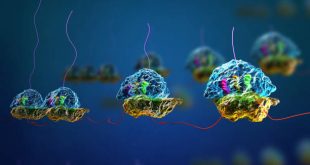
When we observe a living cell, we can see a variety of living bodies of definite structures and functions suspended in the cytoplasm, known as organoids or organelles. These organelles are the main sites for various cytoplasmic activities. Some of these are concerned with the chemical activities or metabolism of …
Read More »Variation in Chromosome Types: The Lampbrush Chromosome
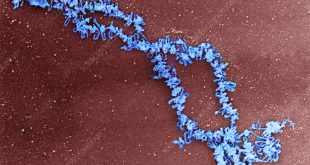
If we observe the nucleus of each cell, we’ll find that the DNA molecule in it is packaged into thread-like structures. These are called chromosomes that carry hereditary information for everything, i.e., height to eye color. These chromosomes are made up of DNA that is tightly coiled many times around …
Read More »Cell Division: Types, Stages & Processes
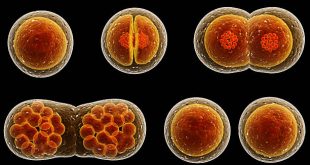
All living things, as well as human beings, are made up of cells. Some organisms have only one cell during their whole lifespan by which they carry out all the physiological processes they require to survive. These are unicellular organisms. For instance, bacteria, yeast, etc. In contrast, there are also …
Read More »Cytology: An Introduction
As human beings are social creatures, they live in a social environment. If we look around us, we can see mainly two types of things in the environment. One is living things & another is non-living things. Living things are those which possess life. Now, what is life? It’s not …
Read More »Aerobic Respiration: Part-2
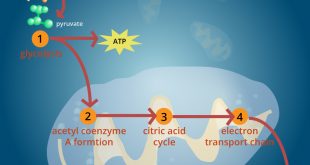
Good to know This series of reactions are also called the TriCarboxylicAcid (TCA) cycle, for the three carboxyl groups on its first two intermediates, or the Krebs cycle, after its discoverer, Hans Krebs (1937). NADH and FADH2 are reduced electron carriers. TCA cycle The name citric acid cycle can also …
Read More »Aerobic Respiration: Part-1
Good to know Plants respire all the time, whether it is dark or light. They photosynthesise only when they are in the light. Conditions Photosynthesis vs respiration Overall result Dark Respiration No photosynthesis Oxygen taken in Carbon dioxide given out Dim light Photosynthesis rate equals respiration rate Neither gas …
Read More »Rickettsia: The Disease Causing Bacteria (Part-2)
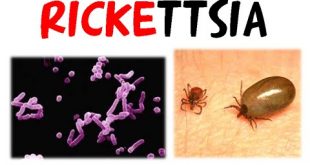
Rickettsias are mainly known for their disease-causing capability. These micro-organisms can cause a great variety of diseases in different flora and fauna; especially in human. Rickettsiosis is a disease caused by intracellular bacteria. It’s a type of infectious disease. Rickettsiosis can be divided mainly in two groups: Spotted fever group …
Read More »