 Plantlet The Blogging Platform of Department of Botany, University of Dhaka
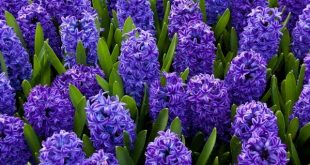
In 1898, Nemec noted that in the petaloid anthers of Hyacinthus orientalis, the pollen grains sometimes form large eight-nucleate structures showing a surprising resemblance to embryo sacs. He believed that they arose as the result of a degeneration of the generative nucleus and three divisions of the vegetative nucleus of …
Read More »TimeLine Layout
January, 2020
-
7 January
Discovery about the Male, Female Gametophytes & Syngamy
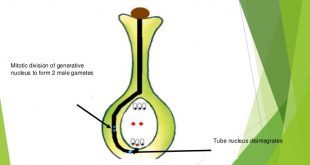
Among early students of the development of pollen, Hofmeister (1848) presented some surprisingly good illustrations of the process of tetrad formation (microspore tetrad), and Reichenbach, Hartig and several other workers noted the presence of two nuclei in whole mounts of the mature pollen grains of several angiosperms. Discovery of nature …
Read More » -
7 January
Pollen Tube Discovery by G. B. Amici

A pollen tube is a tubular structure produced by the male gametophyte (pollen grain) of seed plants when it germinates at the top of the stigma. It’s elongation is an integral stage in the plant life cycle as it brings the sperm nuclei towards the ovule and causes to happen fertilization. …
Read More » -
6 January
Chemotaxonomy: Semantides

Semantides are information-carrying molecules. Semantides provide taxonomic data not on the basis of presence or absence, but in terms of sequences, ratios or percentages,. Semantides are of three types, viz., Primary semantide – DNA Secondary semantide- RNA Tertiary semantides – Proteins Sometimes the semantides together with the larger polysachharides, are …
Read More » -
6 January
Chemotaxonomy: Secondary Metabolites

The chemical substances which have been found very useful in taxonomy are secondary metabolites. Secondary metabolites (secondary plant products) perform non-vital (or at least non- universally vital) functions, and are less widespread in plants. The restricted occurrence of these metabolites among plants renders them valuable as taxonomic information. Secondary plant …
Read More » -
6 January
Chemotaxonomy: Introduction and Primary Metabolites
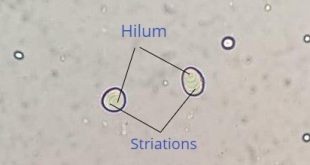
Plant Chemotaxonomy is one of the more fashionable and rapidly extending areas of plant taxonomy that seeks to utilize chemical information to improve classification of plants.It has many diverse and indeed ancient origins. 1. The foremost comes the search by Herbalists, and latterly by pharmacists, for drugs, which has involved …
Read More » -
6 January
Biosystematics: Steps and Categories

The steps in the biosystematic investigation are as follows A sampling of taxon and its population and cytological study of the chromosome of many populations within geographical races, species, and genera; differences in chromosome number, morphology, and behavior of meiosis indicated genetic differences. Determination of the ability of the different …
Read More » -
6 January
Views on Species Concept
Species is the basic & smallest whit of classification which is represented by binomial nomenclature according to ICBN. Two individuals with maximum similarities which can interbred among themselves & produce fertile individual & also can exchange gene are called Species. A Species concept is a concept that is the production …
Read More » -
6 January
IUCN Red List Categories

The International Union for Conservation of Nature’s Red List of Threatened Species Established in 1964, has evolved to become the world’s most comprehensive information source on the global conservation status of animal, fungi and plant species. The IUCN Red List is a critical indicator of the health of the world’s …
Read More » -
6 January
Division II: Rules and Recommendation
Melbourne Code Division II: Rules and Recommendation Chapter II: STATUS, TYPIFICATION, AND PRIORITY OF NAMES Section I: Status Definitions Article 6 (*Some articles are cropped to avoid more detailed info unnecessary in our level. If you wish, you can read the full code from the link here: Melbourne Code) 6.1. Effective …
Read More »