 Plantlet The Blogging Platform of Department of Botany, University of Dhaka

Study of chromosome structure is very important in cytotaxonomic studies. It includes chromosome size, shape and position of centromere (i.e. arm-length ratio of each chromosome in the genome) Chromosomal size and shape are also important as taxonomic criteria in taxonomy. For examples, The chromosomal ratio if Mediola and Trillium of …
Read More »TimeLine Layout
October, 2019
-
16 October
DNA Replication in Eukaryotes: Linear Replication
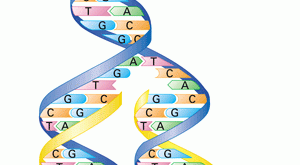
DNA replication in eukaryotes is a complex and unique process involving many enzymes and thousands of ORI at a single time. Unlike the prokaryotic DNA, it involves a linear mode of replication. Why does linear DNA replication involve multiple origins at a time? The large linear chromosomes in eukaryotic cell …
Read More » -
16 October
Replication in Circular DNA: Theta Model
Following Meselson and Stahl’s work, investigators confirmed that other organisms also use semiconservative replication. There are, however, several different ways that semiconservative replication can take place, differing principally in the nature of the template DNA—whether it is linear or circular—and in the number of replication forks. Replicon and Origin of …
Read More » -
15 October
Chromosome Number: A Great Tool in Taxonomic Studies
Taxonomy – is the branch of biology that deals with identification, nomenclature and classification of an object. Cytology – is the branch of biology that deals with origin, structure and function of cell. So Cytotaxonomy presumably means the application of cytological data to taxonomy. More precisely we can say Cytotaxonomy …
Read More » -
15 October
Translation: mRNA to Protein
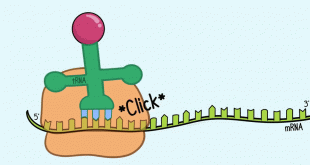
Translation takes place on ribosomes; indeed, ribosomes can be thought of as moving protein-synthesizing machines. A ribosome attaches near the 5′ end of an mRNA strand and moves toward the 3′ end, translating the codons as it goes. Synthesis begins at the amino end of the protein, and the protein …
Read More » -
15 October
Post-transcriptional Modification
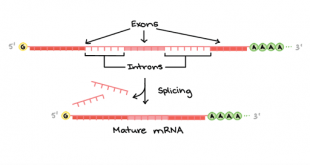
The process of transcription is very similar in prokaryotes and eukaryotes, but there are major differences in the relation between the transcript and the mRNA used for polypeptide synthesis in eukaryotes. In prokaryotes, the immediate product of transcription (the primary transcript) is mRNA; by contrast, the primary transcript (also called …
Read More » -
15 October
Genetic Code
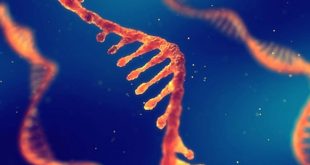
The four bases in DNA – A, T, G, and C are sufficient to specify the 20 amino acids in proteins because each codon is three bases in length. Each sequence of three adjacent bases in mRNA is a codon that specifies a particular amino acid (or chain termination). The …
Read More » -
13 October
Cronquist’s System of Classification
Arthur Cronquist was the Senior Curator of New York Botanic Garden and Adjunct Professor of Columbia University. He presented an elaborate interpretation of his concept of classification in The Evolution and Classification of Flowering Plants (1968), The further edition of his classification was published in “An Integrated System of Classification …
Read More » -
13 October
Phylogenetic Classification of John Hutchinson
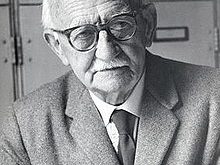
John Hutchinson was a British botanist associated with Royal Botanic Gardens, Kew, England. He developed and proposed his system based on Bentham and Hooker and also on Bessey. His phylogenetic system first appeared as “The Families of Flowering Plants in two volumes. The first volume contains Dicotyledons (published in 1926) …
Read More » -
13 October
Distribution and Sources of Air Microbes

Distribution of Microbes in Air No microbes are indigenous to the atmosphere rather they represent allochthonous populations transported from aquatic and terrestrial habitats into the atmosphere. Microbes of air within 300-1,000 or more feet of the earth’s surface are the organisms of soil that have become attached to fragments of …
Read More »