 Plantlet The Blogging Platform of Department of Botany, University of Dhaka
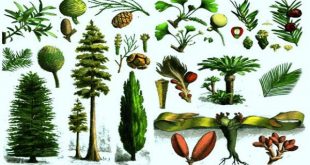
Gymnosperms are seed-producing plants that do not produce any covering surrounding the seed i.e. the seed remains naked. The word ‘Gymnosperm’ originates from Gk. ‘gymnos’ meaning ‘naked’ and Gk. ‘sperma’ meaning ‘seeds’. A Greek botanist named Theophrastus first used the term ‘Gymnosperm’ in 300 BC in his book ‘Enquiry into …
Read More »TimeLine Layout
April, 2020
-
16 April
Rubber: Cultivation And Processing
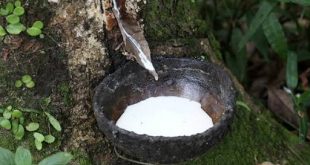
Introduction Rubber is a polyterpene consisting of a long chain of thousands of isoprene units. Isoprene is a five carbon compound and a basic unit of rubber. The isoprenes are joined together end to end to form a giant molecule called polymer. The word rubber was first used by Priestly …
Read More » -
14 April
Oil Yielding Plants
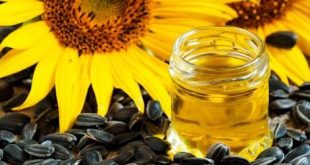
Oil Oils are liquid at room temperature (18-24 C) and usually contain oleic acid. On the other hand, fats are solid at room temperature and contain stearic or palmitic acid. Definition Oils and fats are water insoluble substances called lipid, consisting of a mixture of triglycerides and containing also …
Read More » -
12 April
Introduction Of Paleobotany
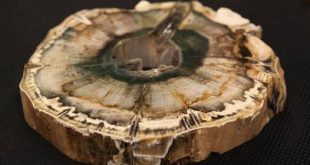
Paleobotany Paleobotany is a study of preserve of vestiges (remaining) of geological past. More comprehensively, it is a part of paleontology or paleo-biology which deals with recovery and identification of plant remains. Paleobotany can be defined or approached from the botanical point of view where emphasis is given on plant …
Read More » -
12 April
Methods OF Fossilization
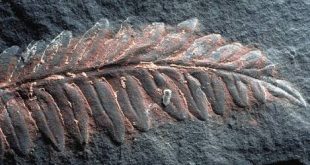
Process of fossilization Mainly there are two theories how plants become fossil. 1. Infiltration theory 2. Molecule by molecule replacement theory 1. Infiltration theory Infiltration theory is based on the fact that mineral matters are infiltrated and precipitated in the cell wall in the buried plant and plant parts undergoing …
Read More » -
5 April
Methods Of Vegetation: Quantitative

Methods of Calculation of Quantitative Data Quantitative data for individual species is calculated by the following methods: 1) Frequency = Number of sampling units in which the species occurred/Total number of sampling units studied Relative frequency = Frequency of a sp./Total frequency of all spp. X 100 2) Density …
Read More » -
5 April
Methods Of Vegetation: Qualitative
Vegetation: Definition Vegetation is defined as an assemblage of plants growing together in a particular location. It is characterized either by its component species or by the combination of structure and functional characters that characterize the appearance or physiognomy of vegetation. Vegetation rapidly responds to changes in habitat. If the …
Read More » -
4 April
Measures of Dispersion
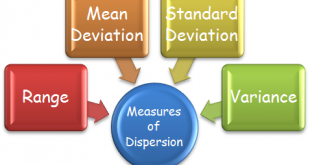
Range The range consists of a bunch of data that shows the distinction between the highest and lowest values among the data set. So as to seek out the range, it’s necessary to first order the data from lowest to highest. Then we have to subtract the smallest value from the …
Read More » -
4 April
Organisation and Presentation of Data

There are two main methods of presenting data of a variable character or a variable. A) Tabulation/Tabular Presentation B) Drawing/Graphical Presentation Tabulation Tabulation is a device for presenting data from a mass of statistical data. Preparation of frequency distribution table is the first requirement for that. Tables are often simple …
Read More » -
4 April
Measures of Central Value: Mean, Median, Mode & Others
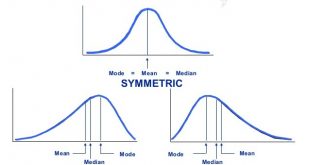
There are various methods to measure the central value of an observation. For instance, average, mean, median, mode, etc. Average The average value of a characteristic is the one central value around which all other observations are distributed. In any large series, nearly 50% of observations lie above the central …
Read More »