Plantlet The Blogging Platform of Department of Botany, University of Dhaka
Lycophyta is a division of the plant kingdom that includes club mosses, spike mosses, and quillworts. These fascinating plants have a rich history, dating back over 300 million years to the early days of the terrestrial environment. Despite their ancient origins, lycophytes have a unique and important place in the world of plants, and their study continues to reveal new insights into the evolution of the plant kingdom.
Lycophyta
Lycophytes are considered to be one of the earliest groups of land plants. It is a group of primitive, spore-bearing plants that were some of the first to evolve on land and were abundant during the Carboniferous period. They first appeared in the Late Silurian period and diversified into a range of forms, from tiny, creeping moss-like plants to large, tree-like forms that reached heights of over 30 meters. This diversity of form allowed lycophytes to colonize a wide range of habitats. This ancient vascular plant has a long evolutionary history extending from the Paleozoic era to the present. It has both living and fossil forms.
- Living form: Selaginella, Isoetes, Lycopodium, etc.
- Fossil form: Selaginellites, Isoetites.
Lycophyta Characteristics
- The sporophyte plant body is differentiated into definite roots, stem, and leaves.
- Leaves are very small and called microphylls.
- The vascular cylinder is protostele or siphonostele.
- Sporangia are borne singly on the upper surface of sporophylls.
- Sporangia are aggregated to form strobilus.
- The stems of Lycophyta are simple, with lateral branches and a limited ability to grow in size.
- Lycophyta typically grows as creeping, underground stems called rhizomes.
- Lycophyta resembles some types of conifers, with needle-like leaves and a similar growth form. However, they are not closely related to conifers.
Lycophyta Structure
- Rhizome: A horizontal, underground stem that serves as the main organ for vegetative growth and reproduction.
- Stem: A simple, unbranched stem that grows upward from the rhizome.
- Microphylls: Small, simple leaves with a single vein, which grow along the stem.
- Sporangia: Specialized structures that contain spores and are produced on the stem or leaves.
- Vascular tissue: Lycophyta has a well-developed system of vascular tissue, which helps to transport water and nutrients throughout the plant.
-
Root system: A small root system, consisting of rootlets, which anchors the plant in the soil and absorbs water and nutrients.
Lycophyta Examples
Some common examples of Lycophyta include:
| Huperzia selago (Fir clubmoss) | 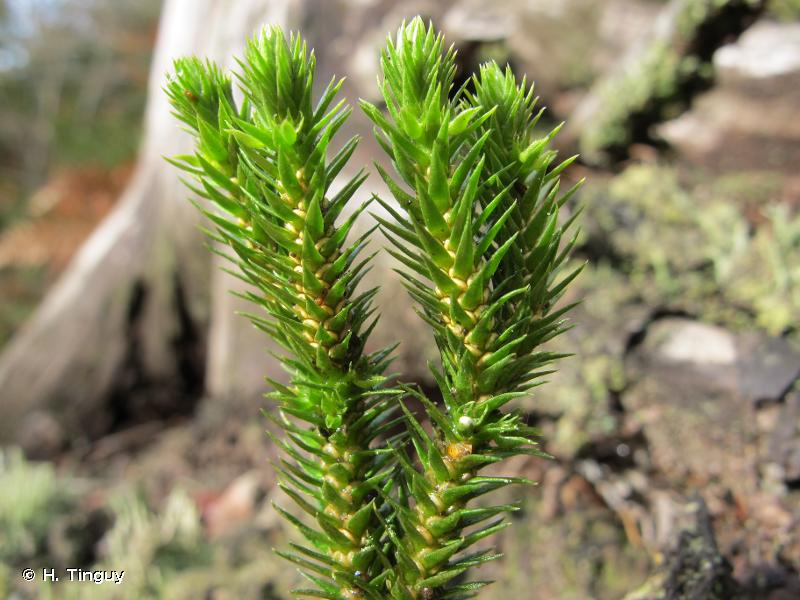 |
|
Lycopodiella inundata (Marsh clubmoss) |
 |
|
Selaginella kraussiana (Southern clubmoss) |
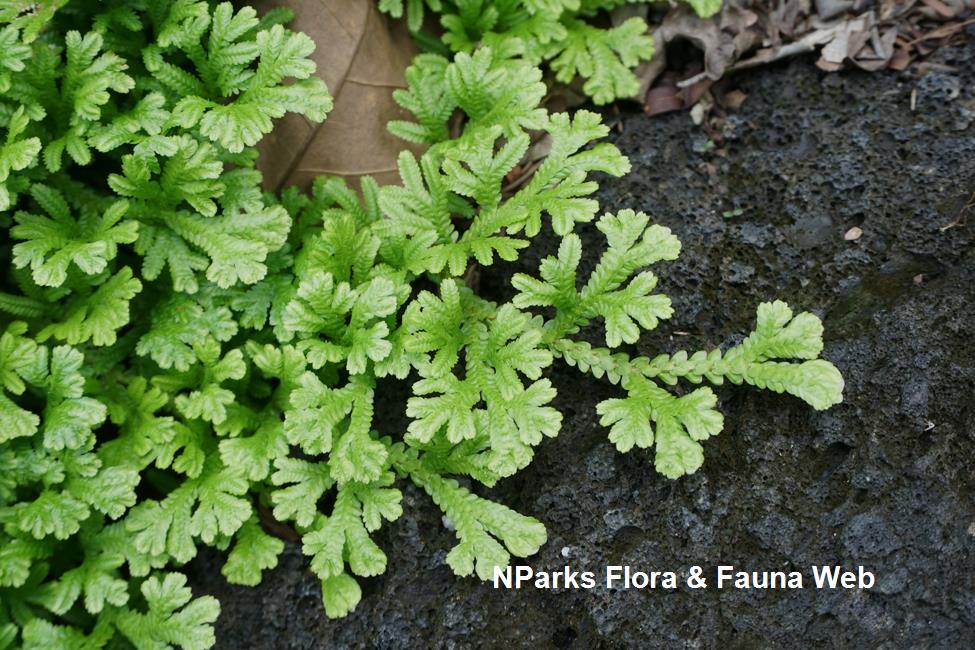 |
|
Isoetes lacustris (Quillwort) |
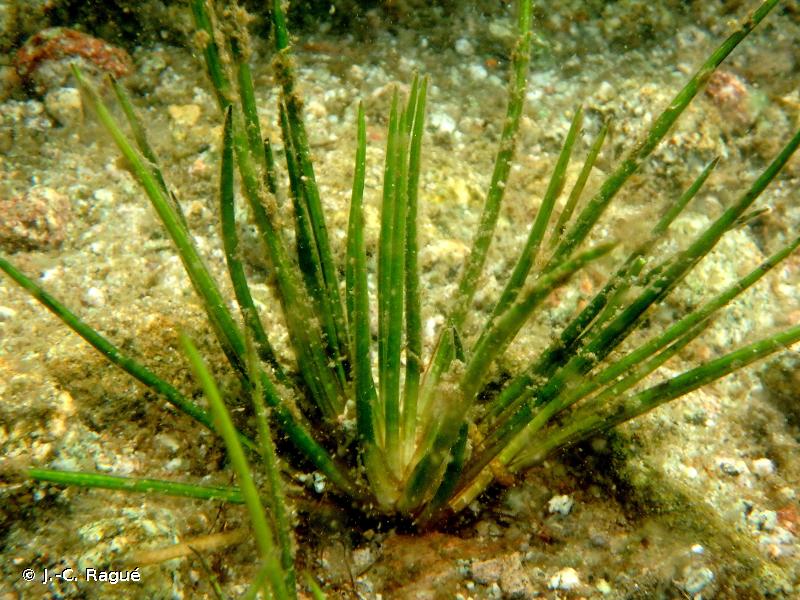 |
| Lycopodium annotinum (Running clubmoss) |  |
|
Diphasiastrum digitatum (Littleleaf spikemoss) |
 |
|
Huperzia phlegmaria (Stinking clubmoss) |