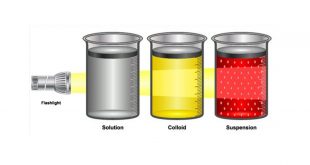
Chemistry is about combining different substances. Sometimes combining substances can cause a chemical reaction and bonding. This creates an entirely new substance called a compound. However, sometimes when there is no chemical reaction or bonding, it forms only a mixture. A mixture is made when two or more substances are …
Read More »Properties of Water & Its Movements inside Plants
Properties of water Most of the unique properties of water are ascribed to the H bond formed between polar water molecules. The two H atoms are angled at 105° in a water molecule (?). 1. Surface tension Surface tension results due to forces of attraction existing between the molecules …
Read More »Cell Types & Tissue System: Simple Tissue
Plant anatomy Study of gross internal structures of plant organs by the method of section cutting is called plant anatomy. Tissue Vegetative Reproductive Complex Tissue is formed by a group of cells having Same origin Same structure Same function Gross classification of tissue Permanent tissue Meristematic tissue Secretory tissue (concerned …
Read More »Cell Types & Tissue System: Complex Tissue
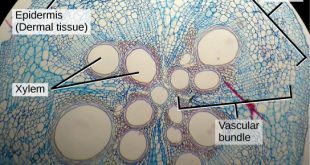
The complex tissue consists of more than one type of cells which work together as a unit. Complex tissues help in the transportation of organic material, water, and minerals up and down the plants. That is why it is also known as conducting and vascular tissue. Collenchyma always absent. Composed of more than one types of cells. Types …
Read More »Fibre Yielding Plants
Fibre may be defined generally as a strand that is very long in comparison to its width. Or, it is a special type of elongated cells with thick walls corresponding to small cavities with pointed ends. • The walls of the fibre contains lignin and cellulose. • They may occur …
Read More »Gymnosperm: Introduction, Characteristics & Classification
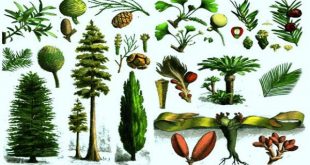
Gymnosperms are seed-producing plants that do not produce any covering surrounding the seed i.e. the seed remains naked. The word ‘Gymnosperm’ originates from Gk. ‘gymnos’ meaning ‘naked’ and Gk. ‘sperma’ meaning ‘seeds’. A Greek botanist named Theophrastus first used the term ‘Gymnosperm’ in 300 BC in his book ‘Enquiry into …
Read More »Rubber: Cultivation And Processing
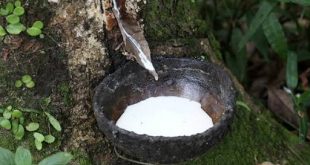
Introduction Rubber is a polyterpene consisting of a long chain of thousands of isoprene units. Isoprene is a five carbon compound and a basic unit of rubber. The isoprenes are joined together end to end to form a giant molecule called polymer. The word rubber was first used by Priestly …
Read More »Oil Yielding Plants
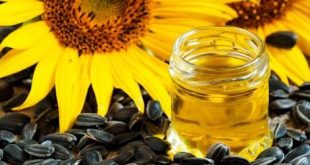
Oil Oils are liquid at room temperature (18-24 C) and usually contain oleic acid. On the other hand, fats are solid at room temperature and contain stearic or palmitic acid. Definition Oils and fats are water insoluble substances called lipid, consisting of a mixture of triglycerides and containing also …
Read More »Introduction Of Paleobotany
Paleobotany Paleobotany is a study of preserve of vestiges (remaining) of geological past. More comprehensively, it is a part of paleontology or paleo-biology which deals with recovery and identification of plant remains. Paleobotany can be defined or approached from the botanical point of view where emphasis is given on plant …
Read More »Methods OF Fossilization
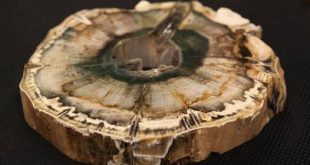
Process of fossilization Mainly there are two theories how plants become fossil. 1. Infiltration theory 2. Molecule by molecule replacement theory 1. Infiltration theory Infiltration theory is based on the fact that mineral matters are infiltrated and precipitated in the cell wall in the buried plant and plant parts undergoing …
Read More »
Plantlet The Blogging Platform of Department of Botany, University of Dhaka