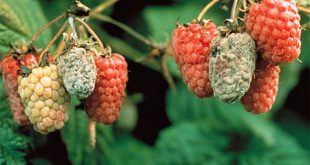
Who hasn’t seen plants with some kind of abnormalities? We all have, right? Sometimes in the form of some black spots or white powders in the leaves; or sometimes those rotten roots or stems; or maybe those holes in the fruits that are making them inedible and many more. Perhaps …
Read More »Microbiology: Stories in Extreme Habitats
WHAT IS EXTREME ENVIRONMENT? An extreme environment exhibits conditions which are challenging for most life forms. These may be extremely high or low ranges of temperature, radiation, pressure, acidity, alkalinity, air, water, salt, sugar, carbon dioxide, sulfur, petroleum and many others. An extreme environment is one place where humans …
Read More »Replication of Circular DNA: Rolling Circle Model
DNA Before discussing “The Replication Of Circular DNA”, first we are going to give a short introduction to DNA. DNA or Deoxyribonucleic acid is the hereditary material present in all living organisms through which the characteristics of one generation are transmitted to the next one. It contains the genetic information …
Read More »Evolution of Green Algae: Chlorococcine Trend
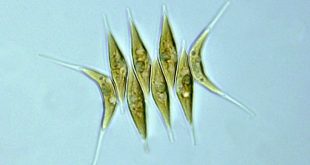
(Evolution of Green Algae has three articles based on its three trends. All of these articles start and end with same paragraphs. If you want to avoid these intros, directly migrate to the point “Chlorococcine line of evolution“). Evolution of Green Algae: Vovocine Trend Evolution of Green Algae: Tetrasporine Trend …
Read More »Evolution of Green Algae: Tetrasporine Trend
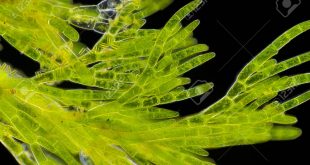
(Hello..readers, Evolution of Green Algae has three articles based on its three trends. All of these articles start and end with same paragraphs. If you want to avoid these intros, directly migrate to the point “Tetrasporine line of evolution” which is after the second horizontal line). Evolution of Green Algae: Volvocine …
Read More »Prion: The Mysterious Infectious Agent
What is prion? Prion is a term first used to describe the mysterious infectious agent responsible for several neurodegenerative diseases found in mammals,including Creutzfeldt-Jakob diseases(CDJ) in humans. The word itself derives from ‘proteinaceous infectious particle’; It refers to the initially heretical hypothesis is that the infectious agent causing those diseases …
Read More »Polyploidy: A Game with Chromosome Numbers
Polyploid Organism bearing the exact multiple of the basic chromosome number (x) of the species. In polyploid cells and organisms, the number of chromosome sets exceeds that of diploid. Depending on the number of chromosome sets, polyploid can be classified as triploids, tetraploids, pentaploids etc. Good to know In potato, …
Read More »Model Organism in Lifescience : Arabidopsis thaliana
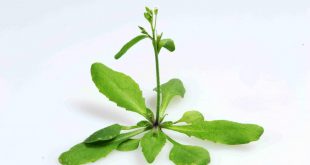
A model organism is a nonhuman species that is used as a framework to develop and standardize the analysis which is applicable to other species. It’s an in vivo model which is extensively used to study human diseases when human experimentation would be unethical. In studying human diseases, model organisms …
Read More »The GRE General Test: A Stairway to Higher Study
GRE stands for Graduate Record Examination. If you are planning on getting yourself in a graduate school (doing your master’s) in mostly USA, you may need a GRE score to apply. It is the most common entrance exam and the largest assessment program for your graduate admission and students from …
Read More »Rhizoid and Rhizomorph: Awww it seems confusing!
Rhizoid and rhizomorphs are two common terms used in the study of fungi. Both of them are derived from the same word root. But still they maintain some differences. Rhizoid The name ‘Rhizoid’ is derived from the Latin prefix ‘rhizo’ – which means root. But it is not a root …
Read More »
Plantlet The Blogging Platform of Department of Botany, University of Dhaka