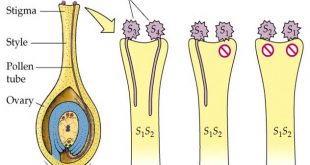
Definition Self-incompatibility is the inability of a pollen to fertilize the stigma of a same flower or the other flower of the same plant. It is a general name for several genetic mechanisms in angiosperms, which prevent self-fertilization and encourage outcrossing. Koelreuter 1st reported SI (Self incompatibility) in Verbascum phoeniceum …
Read More »Introduction to Male Sterility
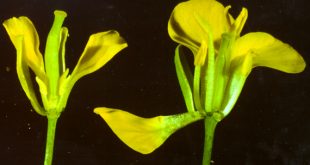
Male sterility The male reproductive organs are mal-developed or aborted so that no viable pollens will be formed. This condition is known as male sterility (M.S) and may be inherited due to genetic, cytoplasmic or interaction of both genetic and cytoplasmic causes. History of Male Sterility The first documentation …
Read More »Fungal Diseases of Rice
Rice, Oryza sativa is one of the main staple crops in the whole world especially in Asia. It provides carbohydrate and calories daily to about half of the world population. Besides, in some countries, this annual plant acts also as an economic crop and serves as a source of foreign …
Read More »Lactophenol Cotton Blue: Most Widely Used Stain in Mycology
Introduction Lactophenol cotton blue (LPCB) is a widely used staining agent used in laboratories to observe chitin walled organisms (e.g. Fungi). It generally gives the specimen a blue color under microscope and helps to find them easily. It is also very simple to prepare. Composition This mounting medium is composed …
Read More »Chromosomal Aberration: Structural and Numerical
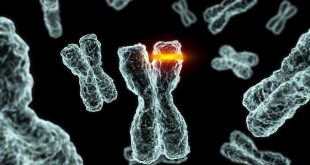
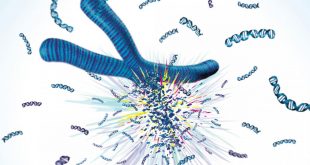
What is Chromosomal Aberration? Any type of change in the structure and number of chromosomes due to certain irregularities during cell division is known as chromosomal aberration. Broadly such aberrations are divided into two major groups. Structural aberration Numerical aberration Again, structural aberrations are of 4 types. Such as: Deletion …
Read More »Solenoid Model: The Second Level of Packing
In the nucleosome model of chromosome, we have discussed about the fundamental organizational unit of chromosome termed as nucleosome. That article gave us a simplistic idea about how the repeated nucleosomes are arranged. The figure in the right hand side clarifies that the nucleosome model provides us with the insight …
Read More »Nucleosome Model of Chromosomes
Let’s kick off this discussion with a simple calculation about the length of DNA in a single diploid human cell. We know according to Watson and Crick model of double helix DNA, each two base pairs has a distance of 3.4 A. There are approximately 6.4 billion base pairs (bp) …
Read More »Coliform Bacteria: An Indicator of Water Contamination
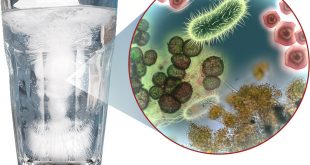
Coliform is commonly known as ” indicator organisms“, refers to a wide groups of bacteria ( about 16 species) that found throughout the environment and used to evaluate the water quality. These organisms have a wide distribution in soil, water surface, vegetations as well as on the skin or intestinal …
Read More »The Microsporangium & the Male Gametophyte
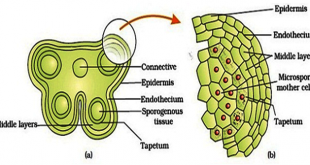
Microsporangium: The sporangium that is connected with the production of microspores (pollen grains) eventually development of male gametophyte is known as microsporangium. Microsporangia are produced on stamen where each stamen has a bilobed anther (each lobe has two microsporangia), connective and anther filament. When anther produces four elongated microsporangia, the …
Read More »ভাইরাস অন্য কোন জীবিত কোষ ছাড়া বংশবৃদ্ধি করতে পারেনা। কিন্তু কেন?
ভাইরাস কোন বাহকের দেহ ছাড়া বাঁচতে পারলেও মৃতের মত আচরণ করে এবং বংশবৃদ্ধি করতে পারেনা। এই তথ্যটা আমরা যখন থেকে ভাইরাসের বৈশিষ্ট্য পড়ে আসছি সেদিন থেকেই জানি। সবাই জানি। কিন্তু কেন এমন হয়? আচ্ছা T2 bacteriophage ভাইরাসের নাম তো শুনেছি সবাই। এই ভাইরাস বংশবৃদ্ধির জন্য ব্যাকটেরিয়ার দেহ বেছে নেয় কেন? …
Read More »
Plantlet The Blogging Platform of Department of Botany, University of Dhaka