Blog Layout

Polyembryony: Multiple Embryos in a Seed

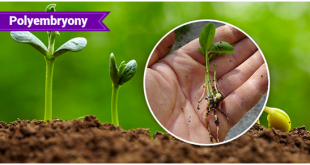
The phenomenon of polyembryony, i.e., the occurrence of more than one embryo in a seed, has attracted much attention ever since its initial discovery in the orange (Citrus sinensis) by Leeuwenhoek (1719). Ernst (1918) and Schnarf (1929), who have reviewed the older literature, classify it into two types—”true” and “false”—depending …

Read More »

Apomixis: A Subistitution for Sexual Reproduction

Apomixis maybe defined (Winkler, 1908, 1934) as the substitution for sexual reproduction (amphimixis) of an asexual process which does not involve any nuclear fusion. For the sake of convenience it may be subdivided into four classes. Non-recurrent apomixis Recurrent apomixis Adventive embryony Vegetative propagation Non-recurrent apomixis In the first, or …

Read More »

Steps of Fertilization

Fertilization is the union of male and female gametes to produce a zygote. There are several steps of fertilization. They are described below. Germination of Pollen. The course of the pollen tube. Entry of pollen tube into the ovule. Entry of pollen tube into the embryo sac. Gametic fusion. Germination …

Read More »

Female Gametophyte: The Embryo Sac with Its Types

The angiosperm female gametophyte is critical for plant reproduction. It contains the egg cell and central cell that become fertilized and gives rise to the embryo and endosperm of the seed, respectively. Female gametophyte development begins early in ovule development with the formation of a diploid megaspore mother cell that …

Read More »

Nemec Phenomenon: Embryo Sac Like Pollen Grain

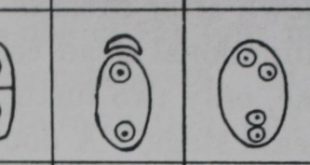
In 1898, Nemec noted that in the petaloid anthers of Hyacinthus orientalis, the pollen grains sometimes form large eight-nucleate structures showing a surprising resemblance to embryo sacs. He believed that they arose as the result of a degeneration of the generative nucleus and three divisions of the vegetative nucleus of …

Read More »

Discovery about the Male, Female Gametophytes & Syngamy

Among early students of the development of pollen, Hofmeister (1848) presented some surprisingly good illustrations of the process of tetrad formation (microspore tetrad), and Reichenbach, Hartig and several other workers noted the presence of two nuclei in whole mounts of the mature pollen grains of several angiosperms. Discovery of nature …

Read More »

Pollen Tube Discovery by G. B. Amici

A pollen tube is a tubular structure produced by the male gametophyte (pollen grain) of seed plants when it germinates at the top of the stigma. It’s elongation is an integral stage in the plant life cycle as it brings the sperm nuclei towards the ovule and causes to happen fertilization. …

Read More »

Chemotaxonomy: Semantides

Semantides are information-carrying molecules. Semantides provide taxonomic data not on the basis of presence or absence, but in terms of sequences, ratios or percentages,. Semantides are of three types, viz., Primary semantide – DNA Secondary semantide- RNA Tertiary semantides – Proteins Sometimes the semantides together with the larger polysachharides, are …

Read More »

Chemotaxonomy: Secondary Metabolites

The chemical substances which have been found very useful in taxonomy are secondary metabolites. Secondary metabolites (secondary plant products) perform non-vital (or at least non- universally vital) functions, and are less widespread in plants. The restricted occurrence of these metabolites among plants renders them valuable as taxonomic information. Secondary plant …

Read More »
0
Would love your thoughts, please comment.x
()
x