 Plantlet The Blogging Platform of Department of Botany, University of Dhaka
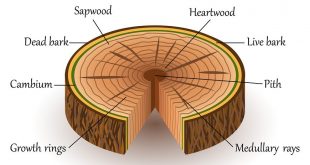
Wood is a porous and fibrous structural tissue found in the stems and roots of trees and other woody plants. It is an organic material – a natural composite of cellulose fibers that are strong in tension and embedded in a matrix of lignin that resists compression. In this article, Internal structure of Wood …
Read More »TimeLine Layout
October, 2020
-
25 October
How to Select Universities to Apply : Higher Studies

Selecting University is a crucial step in the journey of Higher Studies. This post is mainly for those who will prefer to apply centrally for admission to US universities. But others can find the ways of selecting Universities useful too. The post is from a graduate student at the …
Read More » -
25 October
Energy Environment: Global Radiation Balance & Energy Budget
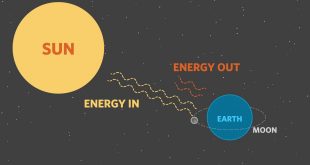
Global Radiation Balance There are various factors that influence the amount of radiation coming from the sun to the earth’s surface. Some of the radiation is reflected upward, some is scattered both upward and downward directions. Besides, some of the radiation is absorbed by the clouds and atmosphere. The rest …
Read More » -
25 October
Arsenic: Exposure, Effect & Contamination

Arsenic is a naturally found chemical element whose atomic number is 33 with a symbol as ‘As’. It occurs in many minerals, usually in combination with sulfur and metals, but also as a pure elemental crystal. Arsenic is one of the fundamental chemical element. It is a metalloid. Symbol: As …
Read More » -
25 October
Interrelationships of quantitative variables: Correlation and Regression

In the experiment, we measure the two continuous characters which are associated with each other. For example, the height of the plant and the temperature of the atmosphere. Accordingly, to understand the relationship between two such variables, we need to know how they are related and how the relationship can …
Read More » -
25 October
Analysis of Variance and F test
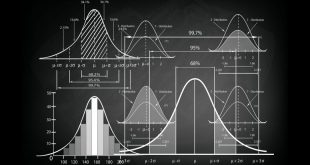
We can test the significance of the two sample means by using a t-test. However, in cases where there are more than two samples, it is done by Analysis of Variance (ANOVA). This method is carried out by comparing sample variances using Variance Ratio Test or F test. So at …
Read More » -
23 October
Toxic Substances & Environmental Health
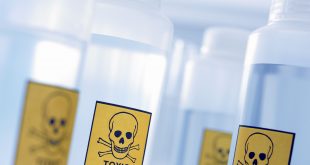
Toxicity is the degree to which a substance can damage an organism. Toxicity can affect a whole organism, such as an animal, bacterium, or plant, as well as a cell (cytotoxicity) or an organ such as the liver (hepatotoxicity). Toxicity effects are dose-dependent; so, even water can lead to water …
Read More » -
22 October
Bacteria: Flagella

Flagella Most prokaryotes are motile by swimming, and this function is typically due to a structure called the flagellum. The plural form of this word is flagella which means whip. Bacterial flagellum is a threadlike locomotor appendages extending outgrowth from the plasma membrane and cell wall. Bacterial flagella are thin, …
Read More » -
22 October
Bacteria: Introduction and Size
Get Free Netflix Now Best safe and secure cloud storage with password protection GPL Themes For Free Get Envato Elements, Prime Video, Hotstar and Netflix For Free Best Money Earning Website 100$ Day Best ever Chat Forum #1 Top ranking article submission website In 1675, on June 9, 10, 11 …
Read More » -
22 October
Fungi: A Kingdom of Achlorophyllous Eukaryotes
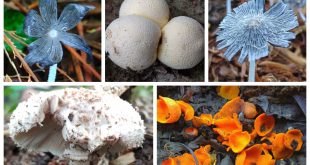
Fungi {sing. fungus (L.) = sphongos (Gr.) – sponge} are a kingdom of usually multicellular, eucaryotic, spore-producing, achlorophyllous organisms with absorptive nutrition that generally reproduce both sexually and asexually and whose usually filamentous, branched somatic structures, known as hyphae, typically are surrounded by cell walls. Currently, over 1.5 million species …
Read More »