The Debate over Spontaneous Generation after Van Leeuwenhoek discovered the previously “invisible” world of microorganisms, the scientific community of the time became interested in the origins of these tiny living things. Until the second half of the nineteenth century, many scientists and philosophers believed that some forms of life could …
Read More »Yearly Archives: 2020
Sphaerocarpales: The Engaging Bottle Liverworts
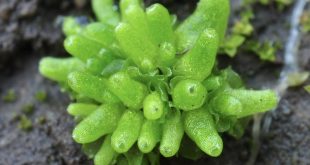
Bryophyte, traditional name for any non-vascular seedless plant. They are the nearest existing relative of early terrestrial plants. They can be found in all ecosystems of earth. Bryophytes are an unceremonious group consisting of three divisions the liverworts, hornworts and mosses . Here we will discuss about Sphaerocarpales, which is …
Read More »Auxin: The First Major Phytohormone to be Discovered
Growth: A process in which there is a change in the form and increase in size and weight by means of cell division, cell enlargement and cell differentiation. Development: A process in which growth, differentiation of organ, maturation and senescence take place in a regular sequence in the life history …
Read More »Phenols : Characteristics, Classification and Uses
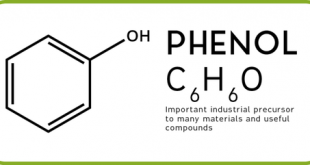
What is Phenol? A large number of phenolic compounds which occur in plants as secondary metabolites are commonly known as Phenols. They are also known as Phenolies, Phenic acid, Benzenol and Carbolic acid.These compounds were first identified by German chemist Friedlieb Ferdinand Runge. They all are a chemical compounds consisting …
Read More »Mitosis: Equational Division and Its Stages
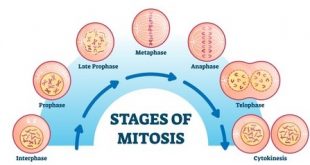
Mitosis is one kind of cell division that occurs in the somatic cells of the body. It produces two daughter cells in each division. The daughter cells have the same number of chromosomes as in mother cells. Therefore, the Haploid mother cell (n) will produce two haploid daughter cells (n) …
Read More »Mycoplasma: The Simplest Prokaryotic Cell
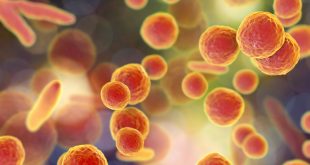
Mycoplasma, also known as PPLO- are the simplest prokaryotic cell. Mycoplasma is a group of small parasitic bacteria that lacks cell walls and can survive without oxygen and generally resistant to antibiotics and can cause pneumonia and urinary tract infections in animals and humans. Few common species of mycoplasma …
Read More »Introduction to & Basic Concepts of Plant Breeding
Plant breeding started with sedentary agriculture, particularly the domestication of the first agricultural plants, a practice which is estimated to date back 9,000 to 11,000 years. Initially, early human farmers selected food plants with particular desirable characteristics and used these as a seed source for subsequent generations, resulting in an …
Read More »Biodiversity Loss & Conservation : Conservation and its Types
Conservation Global acceptance – that conservation of Biodiversity is essential; so, many countries and world organizations are active with definite agenda for conservation What is conservation? “Conservation is the management of human use of the biosphere to yield greatest sustainable benefit to current generations, while maintaining its potential to meet …
Read More »Biodiversity loss and Conservation : Causes of Extinction
Biodiversity loss and Conservation Extinction is the evolutionary equivalent of the proverbial adage that “death and taxes are inevitable.” Evolutionary biologists are certain that, just as every person will eventually pass away, every species will eventually go extinct. In reality, according to the fossil record, 99.9% of all species …
Read More »Ratargul Swamp Forest: The Green Mystery & Discussion Of Plants (Part 2)
Ratargul Swamp Forest is the only swamp forest located in Bangladesh and one of the few freshwater swamp forests in the world. In the previous article, it’s Geography, Ecosystem & Diversity had been discussed. In this one, some of the beauty enhancer and beneficial trees of Ratargul will be discussed in …
Read More »
Plantlet The Blogging Platform of Department of Botany, University of Dhaka