 Plantlet The Blogging Platform of Department of Botany, University of Dhaka

Nomenclature

Nomenclature, in biological classification, system of naming organisms. The species to which the organism belongs is indicated by two words, the genus and species names, which are Latinized words derived from various sources. This system, which is called the Linnaean system of binomial nomenclature, was established in the 1750s by Carolus Linnaeus. Subsequent to the work of Linnaeus, a …
Read More »Micro Evolution
The general theory of evolution is that organisms have changed over time. Usually, natural selection keeps things the way they are. This is stabilizing selection (Figure 17.9a and b, and Figure 17.10). Agouti rabbits are the best adapted rabbits to survive predation, so the agouti allele remains the most common …
Read More »Protein and Peptides: An Inevitable Source of Nutrition (Part 2)

Globular and fibrous proteins A protein whose molecules curl up into a ‘ball’ shape, such as myoglobin or hemoglobin, is known as a globular protein. In a living organism, proteins may be found in cells and in other aqueous environments such as blood, tissue fluid and in phloem of plants. …
Read More »Thermodynamics: A Relationships Between Heat and Other Forms of Energy (Part 2)
Units of work Whenever a new quantity is introduced in physics, the standard metric units associated with that quantity are discussed. In the case of work (and also energy), the standard metric unit is the Joule (abbreviated J). One Joule is equivalent to one Newton of force causing a displacement of one meter. …
Read More »Thermodynamics: A Relationships Between Heat and Other Forms of Energy (Part 1)

The study of the flow of warmth or the other sort of energy into or out of a system because it undergoes a physical or chemical transformation, is named Thermodynamics. In other word relationship between heat, work, temperature, and energy. In broad terms, thermodynamics deals with the transfer of energy from one place to a different and from one form to a …
Read More »Carbohydrates: The Central to Nutrition

Carbohydrates are fundamentally the sugars, starches and fibers found in fruits, grains, vegetables and milk products. Though often it slander in trendy diets, carbohydrates which is one of the basic food groups which are important to a healthy diet. A carbohydrate is a biomolecule containing of carbon (C), hydrogen (H) and oxygen (O) atoms, normally with …
Read More »Bacterial Habitats & Importance
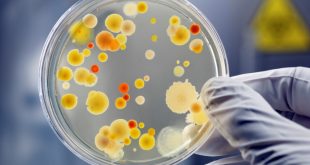
Bacteria (singular: bacterium) are microscopic unicellular organisms that thrive in a variety of environments. These organisms can live in the soil, in the ocean and in the human gut. This organisms are available almost everywhere on our earth and are important to the planet’s ecosystems. Some species can live under …
Read More »Bacterial Structure
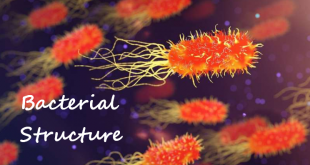
Bacteria (singular: bacterium) are classified as prokaryotes. They are single-celled life/body with a simple core-less internal structure and contain DNA that swims freely in a twisted, thread-like matter called a nucleoid, or in circular parts called plasmids. Bacteria are single-celled microscopic life/organisms that grow in different environments, and these organisms can live in …
Read More »Protein and Peptides: An Inevitable Source of Nutrition (Part 1)
Proteins are large biomolecules, or macromolecules, consisting of one or more long chains of amino acid residues. Proteins perform a vast array of functions within organisms, including catalysing metabolic reactions, DNA replication, responding to stimuli, providing structure to cells, and organisms, and transporting molecules from one location to another. Proteins differ from one another primarily in their sequence of amino acids, which …
Read More »