Classic Layout

Preservation of Cultures

The primary aim of culture preservation is to maintain the organism alive, uncontaminated, and without variation or mutation, that is, to preserve the culture in a condition that is as close as possible to the original isolate. Once a microorganism has been isolated and grown in pure culture, it becomes …

Read More »

Ecosystem: Balance & Imbalance

The term ‘ecosystem’ was first used by A. G. Tansley in 1935. Tansley defined an ecosystem as a particular category of physical systems, consisting of organisms and inorganic components in a relatively stable equilibrium, open, and of various sizes and kinds. An ecosystem is a structural and functional unit of …

Read More »

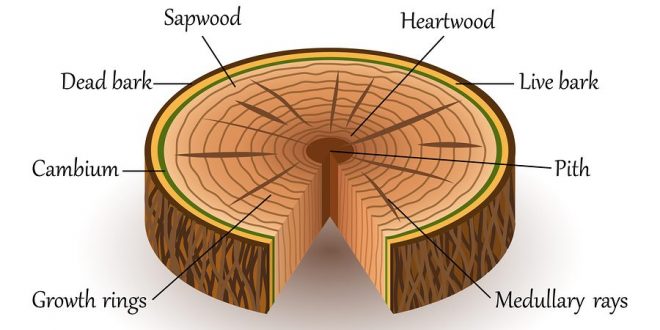
Internal Structure of Wood

Wood is a porous and fibrous structural tissue found in the stems and roots of trees and other woody plants. It is an organic material – a natural composite of cellulose fibers that are strong in tension and embedded in a matrix of lignin that resists compression. In this article, Internal structure of Wood …

Read More »

Arsenic: Exposure, Effect & Contamination

Arsenic is a naturally found chemical element whose atomic number is 33 with a symbol as ‘As’. It occurs in many minerals, usually in combination with sulfur and metals, but also as a pure elemental crystal. Arsenic is one of the fundamental chemical element. It is a metalloid. Symbol: As …

Read More »

Toxic Substances & Environmental Health

Toxicity is the degree to which a substance can damage an organism. Toxicity can affect a whole organism, such as an animal, bacterium, or plant, as well as a cell (cytotoxicity) or an organ such as the liver (hepatotoxicity). Toxicity effects are dose-dependent; so, even water can lead to water …

Read More »

Bacteria: Flagella

Flagella Most prokaryotes are motile by swimming, and this function is typically due to a structure called the flagellum. The plural form of this word is flagella which means whip. Bacterial flagellum is a threadlike locomotor appendages extending outgrowth from the plasma membrane and cell wall. Bacterial flagella are thin, …

Read More »
0
Would love your thoughts, please comment.x
()
x