Classic Layout

Phycological Research in Bangladesh

The branch Phycology has come into existence in 1753 when Carolus Linnaeus first discovered four genera namely Fucus, Conferra, Chara and Ulva. Exactly after 200 years in 1953, Prof. A. K. M. Nurul Islam started to work on algal taxonomy in the Department of Botany, University of Dhaka and devoted …

Read More »

Role of Algae in different industry

Algae is a group of photosynthetic organisms found in both marine and freshwater habitats. As these organisms have a short duplication time, they are considered among one of the fastest growing creatures. They have efficient pathways to fix atmospheric carbon dioxide and to efficiently utilize the available nutrients to convert …

Read More »

Chloroplast Evolution: Endosymbiotic Theory

Algae is a heterogeneous group of organisms containing members having chlorophyll ‘a’ as their primary photosynthetic pigments. These green chlorophyll molecules along with some accessory pigments are contained generally in a membrane-bound packet-like structure called chloroplast within the algal body. In some members, the chloroplast is absent though; such as …

Read More »

Growth Pattern in Algae

Development of algal vegetative and reproductive part in multicellular algae by cell division resulting in complex and large structure is known as algal growth. But in case of unicellular algae simple increase in size in the body results in growth of the cell. E.g. Chlamydomonas (unicellular algae). Basically there are …

Read More »

Green Algae & The Origin of Higher Plants

The transformation of green, photosynthetic algae from their original simple aquatic life to advanced terrestrial plants was a key event in the history of planet Earth, ranking in significance with the origin of photosynthesis. It is quite obvious from phylogenetic, molecular and morphological studies that higher plants are derived from …

Read More »

Algae: An Introduction

Phycology or algology is the study of algae. The word ‘Phycology’ is derived from the Greek word ‘Phykos’ meaning seaweed. The algae are thallophytes (plants lacking roots, stems and leaves) that have chlorophyll as their primary photosynthetic pigment and lack a sterile covering of cells around their reproductive cells or …

Read More »

Origin Of Bryophytes

Though almost in all cases, when we talk about the origin, it goes about the discussion of fossils, bryophytes don’t have any primitive form than what at present-day it is. Usually, the study about the origin of bryophytes is something like a hypothesis- based upon the comparative studies about the …

Read More »

Takhtajan’s System of Classification

Present-day Armenian-born botanist & systematist Armen Leonovich Takhtajan (1910-2009) was one of the most influential figures of 20th century in the field of plant evolution, systematics, and biogeography. His other interests included morphology of flowering plants, paleobotany, and the flora of the Caucasus (region between the Black sea & the Caspian sea). Good to know …

Read More »

Anthoceros: The Hornworts

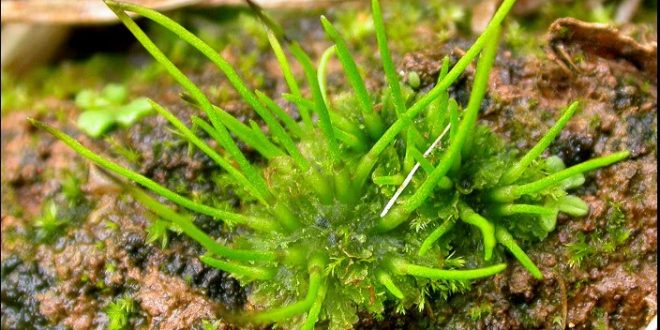
Systematic position Division: Bryophyta Class: Anthoceropsida Order: Anthocerotales Family: Anthocerotaceae Genus: Anthoceros Habit and Habitat The name ‘Anthoceros’ means ‘flower horn’ and refers to the characteristics horn-shaped saprophyte. Anthocerosis a genus of hornworts in the family Anthocerotaceae. With about 250 species, it is widely distributed in the tropical and temperate regions …

Read More »
0
Would love your thoughts, please comment.x
()
x