Blog Layout

Transposable Genetic Elements

Transposons were first discovered in corn (maize) during the 1940s and ’50s by American scientist Barbara McClintock, whose work won her the Nobel Prize for Physiology or Medicine in 1983. The colourful pattern on maize ears have an important scientific significance. Modern research have shown that the stripes and spots …

Read More »

DNA Replication in Eukaryotes: Linear Replication

DNA replication in eukaryotes is a complex and unique process involving many enzymes and thousands of ORI at a single time. Unlike the prokaryotic DNA, it involves a linear mode of replication. Why does linear DNA replication involve  multiple origins at a time? The large linear chromosomes in eukaryotic cell …

Read More »

Replication in Circular DNA: Theta Model

Following Meselson and Stahl’s work, investigators confirmed that other organisms also use semiconservative replication. There are, however, several different ways that semiconservative replication can take place, differing principally in the nature of the template DNA—whether it is linear or circular—and in the number of replication forks. Replicon and Origin of …

Read More »

Translation: mRNA to Protein

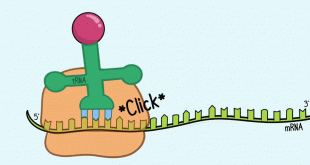
Translation takes place on ribosomes; indeed, ribosomes can be thought of as moving protein-synthesizing machines. A ribosome attaches near the 5′ end of an mRNA strand and moves toward the 3′ end, translating the codons as it goes. Synthesis begins at the amino end of the protein, and the protein …

Read More »

Post-transcriptional Modification

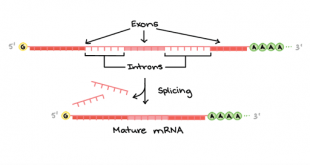
The process of transcription is very similar in prokaryotes and eukaryotes, but there are major differences in the relation between the transcript and the mRNA used for polypeptide synthesis in eukaryotes. In prokaryotes, the immediate product of transcription (the primary transcript) is mRNA; by contrast, the primary transcript (also called …

Read More »

Genetic Code

The four bases in DNA – A, T, G, and C are sufficient to specify the 20 amino acids in proteins because each codon is three bases in length. Each sequence of three adjacent bases in mRNA is a codon that specifies a particular amino acid (or chain termination). The …

Read More »

Cronquist’s System of Classification

Arthur Cronquist was the Senior Curator of New York Botanic Garden and Adjunct Professor of Columbia University. He presented an elaborate interpretation of his concept of classification in The Evolution and Classification of Flowering Plants (1968), The further edition of his classification was published in “An Integrated System of Classification …

Read More »

Phylogenetic Classification of John Hutchinson

John Hutchinson was a British botanist associated with Royal Botanic Gardens, Kew, England. He developed and proposed his system based on Bentham and Hooker and also on Bessey. His phylogenetic system first appeared as “The Families of Flowering Plants in two volumes. The first volume contains Dicotyledons (published in 1926) …

Read More »
0
Would love your thoughts, please comment.x
()
x