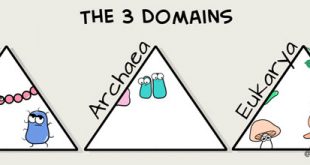
A domain is the highest taxonomic level of species in biology. In 1977, Woese and his coworkers developed the groundbreaking three-domain system. They proposed this classification based on differences in the sequences of nucleotides in the cell’s ribosomal RNAs (known as 16S rRNA). They created the first worldwide tree of …
Read More »Diversity in Living Organisms: Five Kingdom Classification
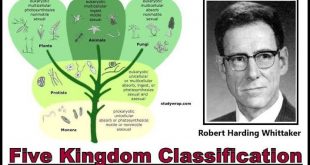
Our living planet has a huge number of living organisms. We can’t know each of them properly without a proper format that going to direct us to know this variety and richness of organisms. That’s why we were introduce with a new term-CLASSIFICATION! What is Classification? The system of assembling …
Read More »Theory of Abiogenesis and Biogenesis
The Debate over Spontaneous Generation after Van Leeuwenhoek discovered the previously “invisible” world of microorganisms, the scientific community of the time became interested in the origins of these tiny living things. Until the second half of the nineteenth century, many scientists and philosophers believed that some forms of life could …
Read More »Mycoplasma: The Simplest Prokaryotic Cell
Mycoplasma, also known as PPLO- are the simplest prokaryotic cell. Mycoplasma is a group of small parasitic bacteria that lacks cell walls and can survive without oxygen and generally resistant to antibiotics and can cause pneumonia and urinary tract infections in animals and humans. Few common species of mycoplasma …
Read More »Defense Against Disease : Active And Passive Immunity
We now want to tell in detail something that was too important for our immune system. Our ability to defend ourselves against infection by pathogens (disease-causing organisms). We have seen that some people experience few or no symptoms when exposed to certain infectious diseases. Even though a person may be …
Read More »Sulphur Cycle & Microbial Role in It
The sulfur cycle is the collection of processes by which sulfur moves between rocks, waterways and living systems. Such biogeochemical cycles are important in geology because they affect many minerals. Biochemical cycles are also important for life because sulfur is an essential element, being a constituent of many proteins and cofactors, and sulfur compounds can be used as oxidants or reductants in …
Read More »Rickettsia: The Disease Causing Bacteria (Part-2)
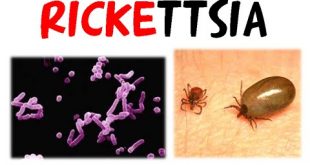
Rickettsias are mainly known for their disease-causing capability. These micro-organisms can cause a great variety of diseases in different flora and fauna; especially in human. Rickettsiosis is a disease caused by intracellular bacteria. It’s a type of infectious disease. Rickettsiosis can be divided mainly in two groups: Spotted fever group …
Read More »Winogradsky Column
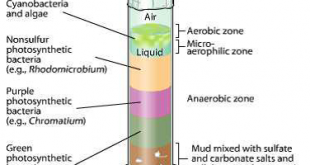
The Winogradsky column is a simple device for culturing a large diversity of microorganisms. Invented in the 1880s by Sergei Winogradsky, the device is a column of pond mud and water mixed with a carbon source such as newspaper (containing cellulose), blackened marshmallows or egg-shells (containing calcium carbonate), and a …
Read More »Nitrogen Fixation & Root Nodule Formation
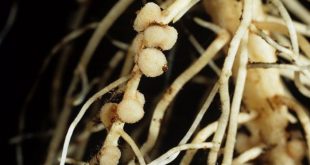
Nitrogen fixation is a process by which molecular nitrogen in the air is converted into ammonia (NH3) or related nitrogenous compounds in soil. Atmospheric nitrogen is a relatively nonreactive molecule that is metabolically useless to all but a few microorganisms. Biological nitrogen fixation converts N2 into ammonia, which is metabolized by …
Read More »Nitrogen Cycle: Converting Nitrogen into Multiple Chemical Forms
The nitrogen cycle is the biogeochemical cycle by which nitrogen is converted into multiple chemical forms as it circulates among the atmosphere, terrestrial, and marine ecosystems. The conversion of nitrogen can be carried out through both biological and physical processes. Important processes in the nitrogen cycle include fixation, ammonification, nitrification, …
Read More »
Plantlet The Blogging Platform of Department of Botany, University of Dhaka