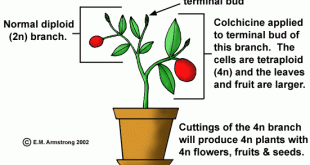
Haploid Breeding Haploids are sporophytic plants that are autonomous and possess only a single set of chromosomes (gametophytic chromosome number). These are in contrast of diploids containing two sets of chromosomes. Haploids may be originated from a gametic cell in the embryo sac or in the pollen grain. In haploids, …
Read More »Blog Layout
Microbiology in Freshwater and Marine Habitats
Water Microbiology Water is the vital element for every living organisms on earth. So, it’s needed to ensure safe access to clean drinking water for all as most of the important bacterial diseases are transmitted through water . Water microbiology is the study of microorganisms like bacteria, viruses, protozoa, microscopic …
Read More »Soil Microbiology: The Scientific Discipline of Microbial Communities in Soil
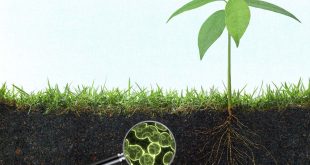
Soil Microbiology is concerned with the study of all biological aspects of the microorganisms (bacteria, archaea, viruses, fungi, parasites and protozoa) that exist in the soil environment. However, before going ahead with the discussion of the functions and facts of microorganisms in soil, first we need to know what the …
Read More »Autopolyploidy: Multiplying Same Genome
Link of other two related artciles 1 and 3. This is number 2. (Polyploidy: A Game with Chromosome Numbers) (Allopolyploidy: Mixing up Different Genomes) Euploids Get Free Netflix Now Best safe and secure cloud storage with password protection GPL Themes For Free Get Envato Elements, Prime Video, Hotstar and Netflix …
Read More »The Disease Cycle: Stages of Disease Development
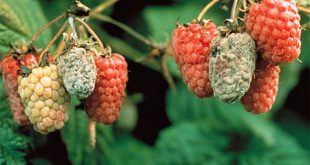
Who hasn’t seen plants with some kind of abnormalities? We all have, right? Sometimes in the form of some black spots or white powders in the leaves; or sometimes those rotten roots or stems; or maybe those holes in the fruits that are making them inedible and many more. Perhaps …
Read More »Microbiology: Stories in Extreme Habitats
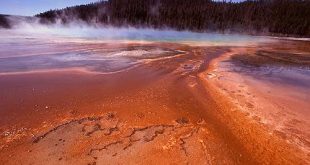
WHAT IS EXTREME ENVIRONMENT? An extreme environment exhibits conditions which are challenging for most life forms. These may be extremely high or low ranges of temperature, radiation, pressure, acidity, alkalinity, air, water, salt, sugar, carbon dioxide, sulfur, petroleum and many others. An extreme environment is one place where humans …
Read More »Replication of Circular DNA: Rolling Circle Model
DNA Before discussing “The Replication Of Circular DNA”, first we are going to give a short introduction to DNA. DNA or Deoxyribonucleic acid is the hereditary material present in all living organisms through which the characteristics of one generation are transmitted to the next one. It contains the genetic information …
Read More »উদ্ভিদের সাথে পরিচিতিঃ মধু লনিসেরা Lonicera japonica
আমাদের গল্পের জায়গায়, কার্জনহলের মেহগনি গাছের নিচে যখন বসতাম আশে পাশের গাছগুলো মুগ্ধ করতো আজো মুগ্ধ করে বলেই সেখানে বসা। সেখানে প্লাস্টারকরা বোর্ডের পাশেই মাটিতে লতানো একটা অচেনা উদ্ভিদ ছিলো। একদিন আমি আর আমার বন্দ্ধ শামীম বসে ছিলাম। এইদিক ঐদিক দেখতে দেখেতেই হঠাৎ সেদিকে নজর পড়লো তাই কি ধরনের উদ্ভিদ, …
Read More »Evolution of Green Algae: Chlorococcine Trend
(Evolution of Green Algae has three articles based on its three trends. All of these articles start and end with same paragraphs. If you want to avoid these intros, directly migrate to the point “Chlorococcine line of evolution“). Evolution of Green Algae: Vovocine Trend Evolution of Green Algae: Tetrasporine Trend …
Read More »Evolution of Green Algae: Tetrasporine Trend
(Hello..readers, Evolution of Green Algae has three articles based on its three trends. All of these articles start and end with same paragraphs. If you want to avoid these intros, directly migrate to the point “Tetrasporine line of evolution” which is after the second horizontal line). Evolution of Green Algae: Volvocine …
Read More »
Plantlet The Blogging Platform of Department of Botany, University of Dhaka