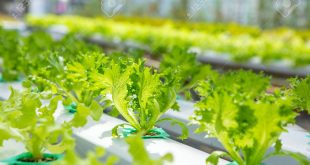
“Healthy citizens are the greatest asset any country can have.” Said late British prime minister Sir Winston Leonard Spencer Churchill. For maintaining good health, we require food. Thus, food ranks first among the basic necessity of life. Although food being produced to feed every individuals among all over the world. …
Read More »Blog Layout
DNA Barcoding: Transforming Species Identification
DNA Barcoding DNA barcoding is a method of species identification using a short section of DNA from a specific gene or genes. Everyone is familiar with industrial barcodes as unique identifiers for commercial products. Similar to these industrial barcodes, short gene segments – known as DNA barcodes – are unique …
Read More »Genetic Markers: Key Tools in Modern Genomics
What is “A Marker”? A marker may be defined as a “Mark of identification”. In Biology three major types of markers are used: Morphological markers (also called “classical” or “visible” markers) which are phenotypic traits. Biochemical markers- called isozymes-are multiple forms of enzymes, including allelic variants of enzymes. A genetic …
Read More »Oomycetes: Order Peronosporales
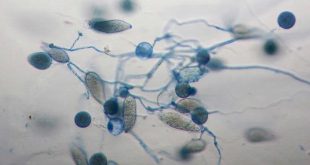
Order Peronosporales, Aquatic or terrestrial; parasitic on algae or vascular plants, the latter mostly obligate parasites causing downy mildews; in advanced species, zoosporangia borne on well-differentiated sporangiophores, deciduous and behaving as conidia (asexually produced spores); example genera include Albugo, Peronospora, Bremia, and Plasmopara. Habitat They are aquatic, amphibious and terrestrial species. Forming a highly group …
Read More »Soil Forming Processes
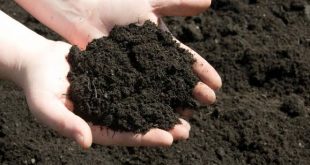
The soil-forming is a complex process along with a lot of factors and processing ways. It takes a long period of time to develop even an inch of soil. In this article, the basic processes of soil formation are discussed briefly. Related article– Soil Forming Factors Soil Forming processes There …
Read More »Equisetum: The Scouring Rushes
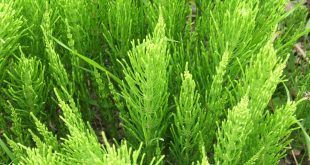
Equisetum: The Scouring Rushes Equisetum commonly known as ‘Horsetails’ or ‘Scouring rushes’. It comprises about 25 species and is worldwide in distribution. Except This genus in vascular plants, there is no living genus in Equisetaceae family that reproduces by spores rather than seeds. Taxonomic position: Division: Sphenophyta Class: Sphenopsida Order: …
Read More »Types & Procedures of Selection Process (Part-2)
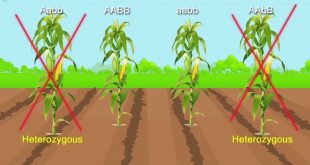
Plant breeding is defined as identifying and selecting desirable traits in plants and combining this into one individual plant. Since 1900, Mendel’s laws of genetics provided the scientific basis for plant breeding. Selection is the most ancient and basic procedure in plant breeding. Selection procedures used in plant breeding have …
Read More »Types & Procedures of Selection Process (Part-1)
Plant improvement must have been started with the primitive man changing his mode of life from a nomad to an agriculturist. To have a crop in the next season, he had obtained seeds from the first crop. For this, unconsciously the process of selection is practiced for a long time …
Read More »Oomycetes: Order Saprolegnia
The oomycetes, also known as “water molds”, are a group of several hundred organisms that include some of the most devastating plant pathogens. The diseases they cause include seedling blights, damping-off, root rots, foliar blights and downy mildews. Some notable diseases are the late blight of potato, downy mildew of …
Read More »Classification of Life: The Three Domain Concept
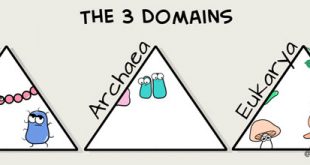
A domain is the highest taxonomic level of species in biology. In 1977, Woese and his coworkers developed the groundbreaking three-domain system. They proposed this classification based on differences in the sequences of nucleotides in the cell’s ribosomal RNAs (known as 16S rRNA). They created the first worldwide tree of …
Read More »
Plantlet The Blogging Platform of Department of Botany, University of Dhaka